 ultimate-guide
Hail Damage Repair for Leased Vehicles: 2026 Guide
Table of Contents
- How Hail Damage Repair for Leased Vehicles Differs From an Owned Car
- Who Actually Pays: You, the Lessor, or the Insurer
- Insurance Claims for Hail Damage on a Leased Car
- Paintless Dent Repair for Leased Cars: Why It Fits Lease Contracts
- The Lease Return Inspection Process and Excess Wear and Tear
- Hail Damage Repair Timeline: What to Expect From Claim to Turn-In
- Lease Buyout vs. Repair, GAP Insurance, and OEM Parts on a Lease
- Negotiating the Inspection Report
- Frequently Asked Questions
Last Updated: September 11, 2026
How Hail Damage Repair for Leased Vehicles Differs From an Owned Car
Hail damage repair for leased vehicles adds a layer owners never face: the car isn't yours, and the title holder has a say in how it gets fixed. On a lease, the lessor holds the residual value, so the repair must satisfy both your insurer and the leasing company's turn-in standards.
Who Actually Pays: You, the Lessor, or the Insurer
The insurer pays for covered hail damage, the lessor owns the vehicle, and you cover the deductible.
Comprehensive coverage responds to hail, and most leases require it for the life of the contract (iii.org). File the claim, pay your deductible, and the insurer covers the rest of the approved repair. The lessor rarely pays anything, since hail is a sudden event rather than gradual deterioration.
A common mistake is assuming the leasing company will handle the claim. They won't. You're the policyholder, so the claim is yours to file, and the check is typically made out to both you and the lessor.
Insurance Claims for Hail Damage on a Leased Car
Filing an insurance claim for hail damage on a leased car works like any other comprehensive claim, with one extra step: the lessor has to be named on the payment. The Colorado Division of Insurance consumer guides outline how policyholders file comprehensive claims and what an insurer must disclose during the process.
Here's the sequence that avoids delays:
- Report the claim to your insurer as soon as you notice the dents.
- Get an adjuster estimate before authorizing any repair.
- Confirm the lessor's payee requirements in writing.
- Choose a shop that works directly with insurers on lease claims.
Why the Lessor Must Be Listed as Payee
The lessor is listed as payee because they hold financial interest in the vehicle until the lease ends. Insurers issue the settlement check to both parties, and the leasing company typically endorses it once the repair is verified. Skip this step and the check stalls.
Paintless Dent Repair for Leased Cars: Why It Fits Lease Contracts
Paintless dent repair is the method most lease contracts favor because it preserves the factory finish and original panels. PDR technicians massage dents out from behind the panel using specialized rods and reflective light boards, so nothing gets sanded, filled, or repainted. That matters on a lease because original paint and panels protect the vehicle's residual value.
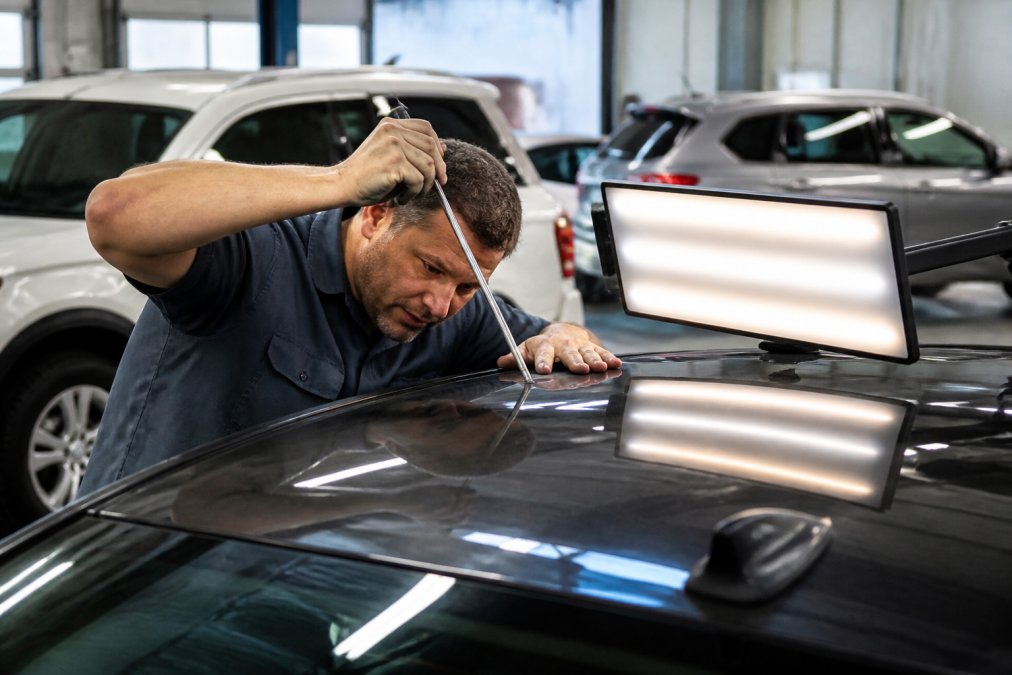
Traditional body shop work can involve filler and repainting, which may show up on a damage assessment and raise questions at turn-in. PDR avoids that, and most hail dents, especially shallow ones covering a hood or roof, come out cleanly. The method has limits: deep dents with stretched metal or damaged edges may need conventional repair, and cracked glass always does.
The Lease Return Inspection Process and Excess Wear and Tear
The lease return inspection process is where hail damage either gets resolved or becomes a bill. Before turn-in, the lessor sends an inspector to document the vehicle's condition against a wear-and-tear standard written into your lease agreement. Hail dents count as damage, not normal wear, so unrepaired damage gets charged back to you.
Excessive wear and tear is defined in your lease contract as damage beyond the lessor's published guidelines, and it usually includes dents, cracked glass, and panel damage. If you repair the hail damage before the inspection and keep the repair invoice, the inspector has nothing to charge.
How the Inspection Actually Works
Most lessors use a third-party inspection company following a standardized condition report. The inspector photographs each panel, measures dents against a size template, and grades the vehicle on a scale the lessor publishes in its wear-and-tear guide. That guide is the document you argue from.
A typical sequence:
- Self-inspection window. The lessor mails or emails a pre-return checklist weeks before turn-in. Use it to walk the car panel by panel and photograph anything the guide might flag.
- Scheduled inspection. The inspector arrives at your home, office, or the dealership. You are allowed to be present, and you should be.
- Condition report issued. The report lists each chargeable item with a photo and a severity grade. This is the document you dispute, not the final bill.
- Dispute window. Most lease contracts give you a set number of days, commonly 7 to 30, to contest line items in writing before the charges are finalized (consumer.ftc.gov).
- Turn-in and final statement. The lessor reconciles the report against your repair invoices and issues a final account statement.
| Stage | What Happens | Your Move |
|---|---|---|
| Pre-inspection | You self-assess the vehicle | Compare dents to the wear guide and photograph everything |
| Inspection day | Inspector documents condition | Be present, ask for the severity grade on each item |
| Report issued | Lessor lists chargeable damage | Pull the report line by line against the wear guide |
| Dispute window | You contest items in writing | Submit repair invoice, dated photos, and a written explanation |
| Turn-in | Vehicle returned | Keep all paperwork for 12 months |
How to Dispute an Inspection Report
You can dispute a lease inspection report, and it is worth doing when the charges do not match reality. Inspectors make errors, and a repair invoice or dated photos of the pre-inspection condition usually resolves them:
- Request the severity grade and the measurement for each chargeable item. The report should state whether a dent is above or below the lessor's threshold size. If it does not, ask for it in writing.
- Match each charge to a specific line in the wear-and-tear guide. If the guide says dents under a certain diameter are normal wear, and the report charges for one below that size, you have a documented dispute.
- Submit evidence, not opinion. A dated photo of the panel before the inspection, a paid repair invoice, or a written statement from the repair facility carries more weight than a phone call.
- Escalate in writing within the dispute window. Most lessors have a formal appeals address or portal. Keep a copy of everything you send.
What Actually Counts as Chargeable
Hail dents are almost always chargeable because they are sudden damage, not gradual wear. The exceptions are narrow: a single small dent below the lessor's published size threshold, or damage already documented on the lease's pre-delivery condition report. Everything else, multiple dents, dents on a panel edge, cracked glass, or any dent requiring paint work, is typically billed back to you.
That is why the repair invoice is the single most valuable document at turn-in. It converts a chargeable item into a resolved one and gives you a paper trail if records disagree later.
Hail Damage Repair Timeline: What to Expect From Claim to Turn-In
The hail damage repair timeline runs from claim filing to completed repair, and it usually takes longer than owners expect because hail storms hit entire regions at once. Body shops and PDR teams get booked out fast after a major storm, so the wait for an appointment can stretch well beyond the repair itself.
A realistic sequence looks like this:
- Claim filed: same day you notice damage
- Adjuster estimate: typically within a week or two
- Repair authorization: after the estimate and lessor payee details are confirmed
- Repair itself: often one to several days depending on dent count
- Post-repair verification: before the settlement clears
If your lease ends soon, tell the shop up front. A repair invoice in hand at turn-in is worth more than a promise that the work is scheduled.
Lease Buyout vs. Repair, GAP Insurance, and OEM Parts on a Lease
Three decisions separate a smooth lease exit from an expensive one, and most guides skip all three.
Lease Buyout vs. Repair: The Alternative Most Drivers Miss
If you plan to buy the car at lease end, the calculus changes. You are keeping the vehicle, so the lessor's residual value matters less to them and more to you. The buyout price is set in your lease contract as the residual value plus any applicable fees, and it does not change because of hail damage. The lessor cannot raise the buyout price to account for hail dents.
That creates a real alternative to repairing before turn-in:
- Buy out, then repair on your own schedule. You take title, the lease inspection never happens, and you are free to repair when it is convenient or not at all if you can live with the dents.
- Buy out, then sell. If the vehicle's market value minus the repair cost still exceeds the buyout price, buying out and selling can beat paying the lessor's damage charges.
- Repair, then buy out. If you want the car in clean condition, repair first and keep the invoice. The buyout price is unaffected either way.
The trade-off is cash flow. A buyout requires you to pay the residual value or finance it, and you take on the vehicle's full depreciation from that point forward. Repairing before turn-in keeps the lease structure intact and shifts the cost to your insurer.
Request your written buyout quote from the lessor before the inspection. The quote is typically valid for a set number of days, and having it in hand lets you compare the buyout path against the repair-and-return path on the same day.
GAP Insurance Implications After Hail Damage
GAP coverage pays the difference between what you owe on the lease and what the vehicle is worth if it is totaled. Hail rarely totals a vehicle, but a severe storm can, and if it does, the sequence matters:
- The insurer declares a total loss. The payout is based on the vehicle's actual cash value at the time of the loss, not the residual value in your lease.
- The lessor is paid first. Because the lessor holds the title, the insurer's settlement goes to the leasing company up to the payoff amount.
- GAP covers the shortfall. If the actual cash value is less than the lease payoff, GAP pays the difference. Without GAP, you owe that gap out of pocket.
- You may still owe the deductible and any fees. GAP does not cover your comprehensive deductible, and it does not cover lease-end fees that are unrelated to the total loss.
One nuance most guides miss: if you have already repaired hail damage before the vehicle is totaled, the repair does not increase the actual cash value the insurer will pay. You do not get the repair cost back through the total loss settlement.
OEM vs. Aftermarket Parts on a Lease
Lease contracts often require OEM parts for any panel replacement, and the requirement is usually buried in the wear-and-tear or maintenance section rather than stated up front. Aftermarket parts can trigger charges at turn-in because they do not match the lessor's residual value assumptions, even if the repair looks correct.
The practical rules:
- Ask before the shop orders anything. Request the lessor's written parts requirement in writing. One email prevents a turn-in dispute months later.
- PDR avoids the question entirely. Paintless dent repair does not replace panels or parts, so the OEM-versus-aftermarket issue never arises. That is one more reason PDR fits lease contracts well.
- If a panel must be replaced, document the part source. Keep the invoice showing the OEM part number. If the lessor later questions the repair, the invoice is your proof.
- Aftermarket glass is a common flashpoint. Windshield and glass replacement is often where aftermarket parts show up, and some lessors require OEM glass specifically. Confirm before the work is done.
Negotiating the Inspection Report
Hail damage on a lease feels like a problem with no clean owner, but the path is straightforward once you know who pays and who signs off. Hail Inc. handles the entire chain for drivers across the Denver metro, from direct insurance claim management and $0 out-of-pocket repairs to complimentary rental vehicles and valet pickup at your home or office. Our certified technicians use paintless dent repair backed by a lifetime warranty. Schedule an online appointment with Hail Inc. and turn the car back in without a damage charge.
Frequently Asked Questions
What happens if my leased car gets hail damage?
You are still responsible for returning the vehicle in good condition, so the dents count as damage under your lease agreement. File a comprehensive insurance claim, since hail is covered even though you did not hit anything. The lessor is usually listed as payee on the settlement. Repairing the dents through paintless dent repair before turn-in is normally cheaper than letting the leasing company bill you for excess wear and tear at lease termination.
Does insurance cover hail damage on a leased car?
Yes, if you carry comprehensive coverage, which most lease contracts require. Comprehensive insurance covers hail, cracked glass, and other weather events regardless of fault. Your deductible still applies, and the lessor must be named as payee on the claim. Skipping the claim and paying out of pocket rarely saves money, because the leasing company's damage assessment at turn-in is usually higher than a negotiated repair.
How does Paintless Dent Repair affect lease return inspections?
Paintless dent repair for leased cars preserves the original paint and factory panels, so the vehicle passes inspection without the panel repainting or body filler that shows up on a damage assessment. Because PDR keeps the factory finish intact, it also protects residual value and avoids diminished value flags. Most hail dents, including larger ones on accessible panels, can be removed this way when the paint is not cracked.
Should I repair hail damage before returning a leased vehicle?
Repair before turn-in in almost every case. The lease return inspection process measures dents against the excess wear and tear definition in your lease contract, and unrepaired hail dents typically exceed it. Once you turn the car in, the lessor controls the repair and bills you for it, often at retail body shop rates. Handling the claim and repair yourself gives you control over the adjuster estimate and the final invoice.