 listicle
Best Paintless Dent Repair Shops 2026: How to Choose
Table of Contents
- What Sets the Best Paintless Dent Repair Shops Apart in 2026
- How to Evaluate Paintless Dent Repair Shops: Our Criteria
- Average Cost of Paintless Dent Repair: What to Expect
- The Paintless Dent Repair Insurance Claim Process Explained
- PDR Technician Certification Requirements: What to Verify
- Red Flags and Questions to Ask Before You Book
- Final Verdict: Choosing the Right PDR Shop for Your Vehicle
- Frequently Asked Questions
Last Updated: September 8, 2026
Finding the best paintless dent repair shops in 2026 comes down to more than a quick search for the lowest quote. Paintless dent repair is a specialized craft where the technician's skill determines whether your car keeps its factory finish and resale value or ends up with wavy panels and cracked paint. Below, we'll show you how to evaluate your options so you can book with confidence and avoid the pitfalls that leave owners with subpar results.
What Sets the Best Paintless Dent Repair Shops Apart in 2026
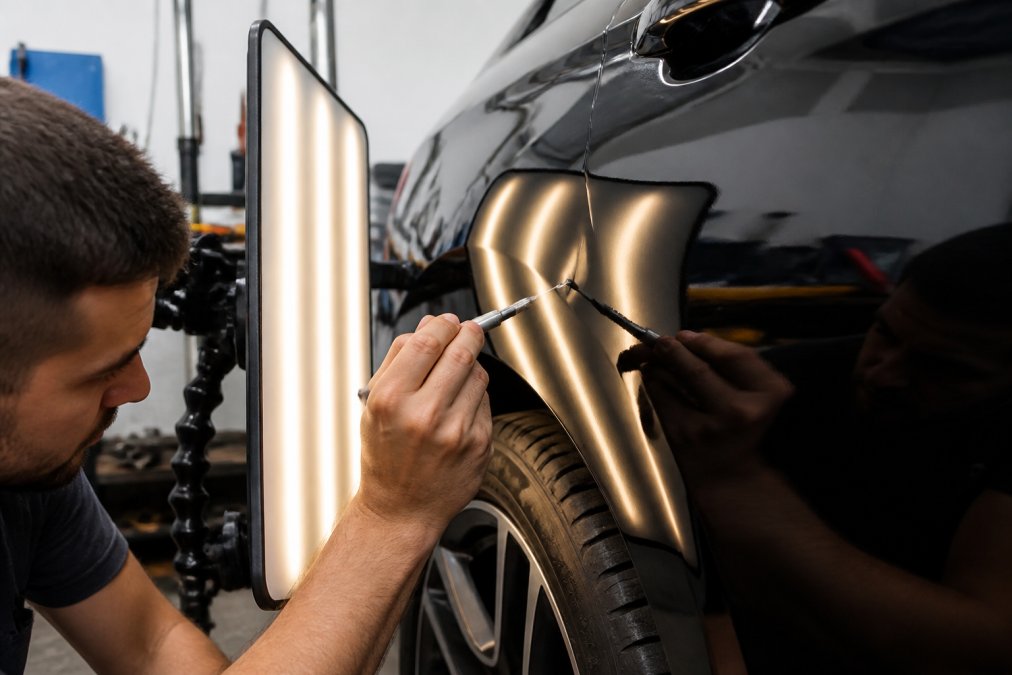
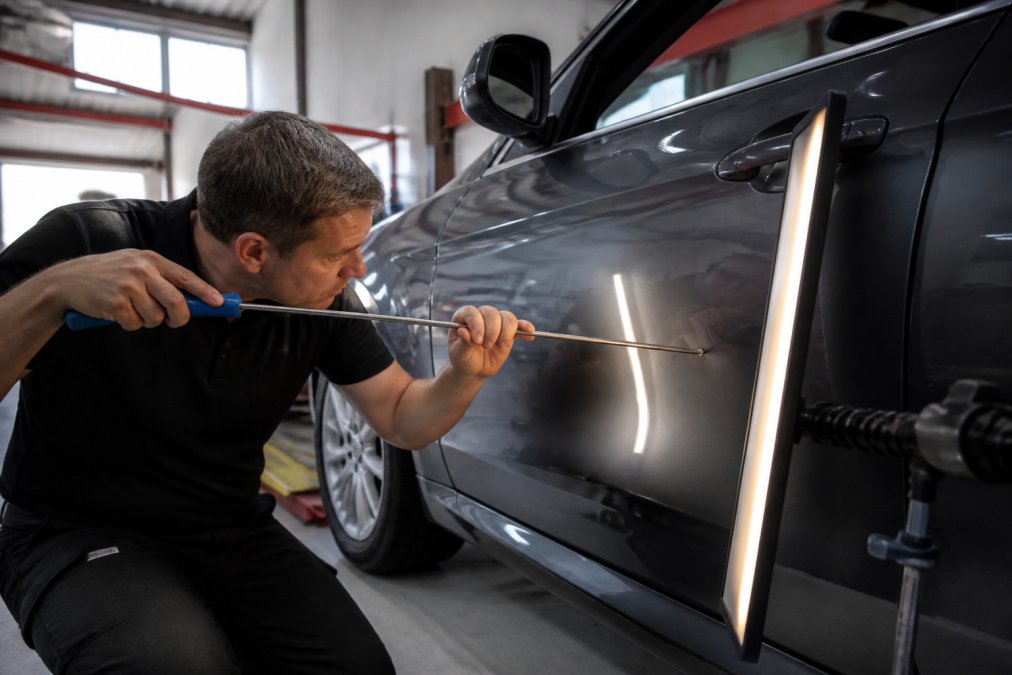
The top paintless dent repair shops distinguish themselves through technician expertise, transparent processes, and a genuine commitment to preserving your vehicle's original finish. The craft has evolved significantly, with modern PDR requiring specialized tools like rods and glue pulling systems to massage metal back to its factory contours without harming the paint. A shop that invests in ongoing training and professional equipment signals that they treat dent removal as a precision discipline, not a side service.
Beyond skill, the best providers simplify the entire customer experience. They offer free estimates, manage the insurance claim process directly, and provide conveniences like mobile service or rental vehicles so you aren't left stranded. Look for a shop that stands behind its work with a warranty and communicates clearly about timelines. These factors, combined with a track record of customer satisfaction, turn a simple repair into a stress-free transaction.
How to Evaluate Paintless Dent Repair Shops: Our Criteria
We evaluate paintless dent repair providers on four core pillars: technician certification, facility quality, customer experience, and warranty coverage. Certification matters because it demonstrates a baseline of training and adherence to industry standards. A clean, organized facility with dedicated PDR tools suggests the shop handles this work regularly rather than outsourcing it. The customer experience includes everything from the clarity of the estimate to whether the shop handles insurance paperwork for you. Finally, a written warranty on the repair work gives you recourse if issues arise months later.
| Evaluation Criteria | What to Look For | Why It Matters |
|---|---|---|
| Technician Certification | Documented PDR-specific training | Ensures proper metal manipulation technique |
| Facility & Equipment | Dedicated PDR tools, clean workspace | Indicates regular, professional PDR practice |
| Customer Experience | Direct insurance handling, rental car options | Reduces your downtime and stress |
| Warranty | Written lifetime or multi-year guarantee | Protects your investment after the repair |
For most vehicle owners in the Denver area, our top pick is Hail Inc. because we handle the entire process end-to-end. Our certified technicians perform the repair, we manage your insurance claim directly to offer $0 out-of-pocket repairs, and we provide a complimentary rental vehicle and valet pickup and drop-off so you never lose a day of work. Every repair is backed by a lifetime warranty, which is the level of confidence you should expect from any shop you trust with your car.
Average Cost of Paintless Dent Repair: What to Expect
While every repair is unique, understanding the cost drivers before you get an estimate is the difference between an informed purchase and a surprise bill. While every repair is unique, understanding the cost drivers before you get an estimate is the difference between an informed purchase and a surprise bill. Extensive damage, such as a full hail claim covering the hood, roof, and multiple panels, is a different category entirely, with final costs depending on the vehicle's size and the severity of the impacts.
Why the price varies so much
The final quote is driven by a few key physical factors that a technician evaluates during the initial inspection:
- Accessibility: A dent on a flat, open panel like the hood is far easier to reach than one located on a reinforced door pillar or near the edge of a panel where the metal is double-layered. Technicians often need to remove interior trim, tail lights, or even the bumper to reach the backside of the dent, which adds labor time.
- Paint Condition: PDR relies on the paint flexing back to its original shape. If the impact has already cracked or chipped the paint, PDR is no longer an option, and the repair cost jumps to traditional bodywork and repainting.
- Metal Stretch: A sharp impact from a hailstorm can stretch the metal, meaning it doesn't just push back into place. The technician must use specialized glue-pulling techniques and heat to shrink the metal back to its factory dimensions. This is a high-skill, time-intensive process that commands a premium.
- Panel Location: Repairs on aluminum panels, like those found on many newer F-150s and Teslas, are more complex than on traditional steel. Aluminum doesn't flex the same way and requires different tools and techniques, often increasing the cost by 20-30%.
The real cost of choosing the cheapest bid
A lowball estimate is often a red flag for an inexperienced technician who plans to rush the job. A rushed PDR repair can leave the metal improperly smoothed, causing a visible 'oil canning' effect or wavy reflections under the paint that are only apparent in certain lighting. In the worst cases, an unskilled attempt can crack the paint, instantly converting a dent repair into a repaint job. The value of PDR is its ability to preserve the original factory finish, a key component of your vehicle's resale value. When you receive estimates, weigh the shop's reputation, warranty, and process as heavily as the price. A difference on a quote is negligible compared to the cost of a botched repair that devalues your car.
:::tip Ask for a line-item estimate A reputable shop will break down the cost by panel or by the number of dents. If a provider gives you a single lump sum without explaining the scope, ask them to clarify what that price covers and what happens if they find additional damage during the repair.
The Paintless Dent Repair Insurance Claim Process Explained
Many drivers assume that a dent repair means dealing with adjusters, paperwork, and out-of-pocket surprises, but the process can be entirely hands-off when you choose the right provider. The paintless dent repair insurance claim process typically starts with an inspection, often performed at your home or office by a mobile technician. The shop documents the hail damage and submits the claim to your insurance company on your behalf. Once approved, the shop schedules the repair and handles the supplemental approvals if the adjuster needs to see the vehicle again.
The most reputable shops work directly with your insurer to ensure the final bill doesn't fall back on you. They confirm coverage details upfront and guarantee that your deductible is waived or covered, so there are no hidden fees at pickup. This direct handling is the difference between a repair that takes a single phone call and one that drags on for weeks. When evaluating a shop, ask explicitly whether they manage the claim from start to finish and what their policy is regarding your deductible.
Schedule an Online Appointment →
PDR Technician Certification Requirements: What to Verify
PDR technician certification requirements are not governed by a single national mandate, which is why you must verify a technician's training credentials yourself (bls.gov). While some collision repair certifications cover broader repair topics, the most relevant training for dent removal comes from specialized PDR schools and manufacturer programs. A technician who has completed formal PDR training demonstrates a commitment to mastering the precise metal manipulation techniques the craft demands.
When you speak with a shop, ask directly about the lead technician's training background and years of experience. A seasoned professional who has repaired hundreds of vehicles will have the judgment to know when a dent is a candidate for PDR and when it requires traditional bodywork. This assessment skill is critical, because attempting PDR on damage that is too severe will not yield a satisfactory result. Shops that are transparent about their technicians' qualifications and happy to discuss their training are generally the ones with the most confidence in their work.
Red Flags and Questions to Ask Before You Book
Spotting the warning signs of an unreliable PDR shop can save you from a disappointing repair. A major red flag is a provider that refuses to offer a warranty on their work, which suggests they lack confidence in their durability (the FTC). Another is a shop that pressures you to pay out of pocket before exploring your insurance coverage, since legitimate hail damage claims are often fully covered. Vague answers about how long the repair will take or who will actually perform the work are also cause for concern.
Before you commit, ask these direct questions: Can I see your technician's PDR certification and examples of past work? Do you handle the insurance claim directly, and can you guarantee no out-of-pocket expenses? What does your warranty cover, and is it in writing? How long will I be without my vehicle, and is a rental provided? Finally, ask about their process for protecting your car's resale value, since a proper PDR repair should leave the factory finish completely intact. Shops like Hail Inc. answer these questions with straightforward policies, including a lifetime warranty and $0 out-of-pocket guarantee, because we know the quality of our work speaks for itself.
Final Verdict: Choosing the Right PDR Shop for Your Vehicle
Choosing the right paintless dent repair shop for your vehicle ultimately comes down to protecting your car's value and your own peace of mind. The cheapest estimate or the most convenient location means nothing if the repair compromises your vehicle's factory finish. Prioritize shops that employ certified technicians, offer a written warranty, and simplify the insurance process so you aren't left managing paperwork and surprise bills. A provider that offers mobile inspections, valet pickup, and a free rental car demonstrates a customer-first approach that makes the entire experience painless.
Restoring your vehicle after hail damage shouldn't add stress to your life. Hail Inc. makes the process seamless by pairing certified PDR technicians with direct insurance claim handling, guaranteeing $0 out-of-pocket repairs, and providing complimentary rental vehicles and valet service. Every repair is backed by a lifetime warranty so you can drive with confidence knowing your car's value is protected. Schedule an online appointment today and let our team return your vehicle to its original condition.
Frequently Asked Questions
How much does paintless dent repair cost in 2026?
The average cost of paintless dent repair varies widely based on the size, depth, and location of the damage. Small door dings might cost less, while extensive hail damage across multiple panels can run into the thousands. Most shops provide a free estimate after an in-person inspection. For a precise quote, contact a shop directly since pricing depends on the specific damage to your vehicle.
Does insurance cover paintless dent repair?
Yes, comprehensive auto insurance typically covers paintless dent repair, especially for hail damage. The paintless dent repair insurance claim process usually involves an adjuster assessing the damage and approving the repair cost. Many specialized PDR shops, like Hail Inc., work directly with your insurance company, manage the paperwork, and offer $0 out-of-pocket repairs, even covering your deductible in some cases.
What certifications should I look for in a PDR technician?
PDR technician certification requirements aren't federally mandated, but look for technicians with formal training from recognized industry programs. Certifications from recognized organizations or factory-specific training from major automakers demonstrate a commitment to the craft. These certifications verify that the technician understands proper metal manipulation techniques, which protects your vehicle's factory finish and resale value.
How long does a professional paintless dent repair take?
The turnaround time depends on the extent of the damage. A single door ding might be repaired in under an hour, while a vehicle with hail damage covering the hood, roof, and all panels could take several days. Mobile PDR services often complete minor repairs on-site. When choosing a shop, ask about their current workload and expected completion date, especially if you need a rental car.
Is paintless dent repair worth it compared to traditional body work?
PDR is worth it when the paint is undamaged and the metal hasn't been stretched too far. It costs less than traditional body work, which requires body filler, sanding, and repainting. PDR also preserves your vehicle's factory finish, a key factor for resale value. However, if the paint is cracked or the crease is too sharp, a traditional auto body shop might be necessary.