 How-to
How Can You Tell if a Dent Is Too Deep for PDR?
Last Updated: November 1, 2026
Quick Summary
A dent is likely too deep for PDR when the paint is cracked or flaking at the center, the metal has sharp creases, or the metal looks stretched with visible ripples. Shallow, smooth-edged dents with intact paint are usually good candidates, since depth matters more than size.
- Cracked or flaking paint at the dent center often rules out PDR.
- Sharp creases mean the metal is folded, so the crease may stay visible.
- Visible ripples around the impact suggest the metal has stretched too far.
- Depth matters more than size when judging a dent's suitability for PDR.
- Ask a technician for a professional assessment to confirm your dent's repairability.
Table of Contents
- What Paintless Dent Repair Can and Cannot Fix
- Visual Cues That a Dent May Be Too Deep for PDR
- Can PDR Fix Sharp Dents?
- Paint Damage and Why It Changes What PDR Can Do
- PDR Dent Size Limits and Why Depth Matters More Than Size
- How Technicians Assess Dents for PDR
- Booking a Free PDR Assessment at Our Arvada Location
- Frequently Asked Questions
What Paintless Dent Repair Can and Cannot Fix
Hail Inc. helps Denver-area drivers figure out which dents can be fixed without paint. The honest answer is that paintless dent repair, or PDR, works on a specific kind of damage. Knowing that line saves you time and keeps you from waiting on a repair that was never going to work.
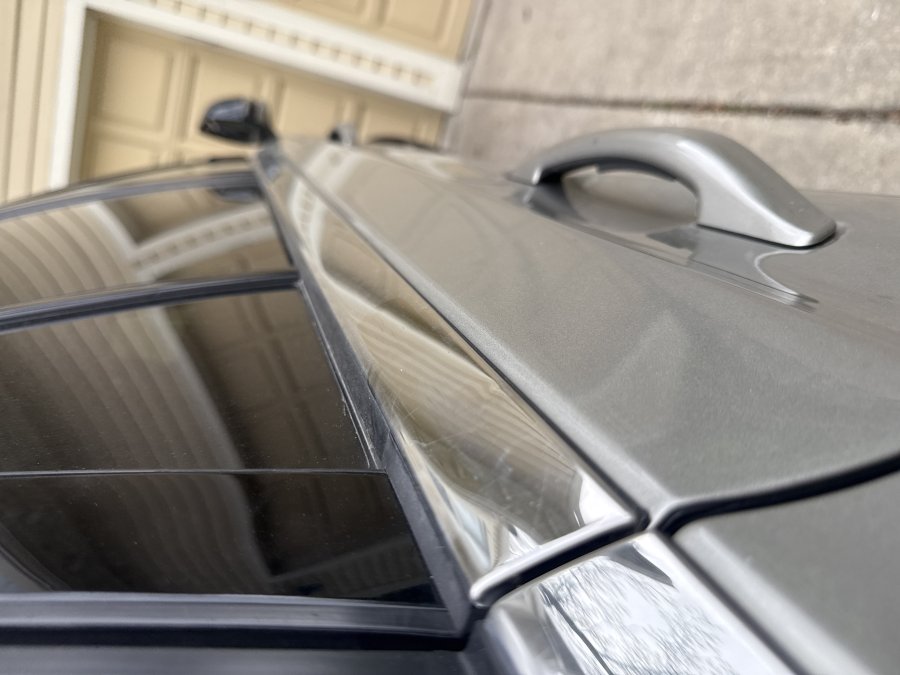
PDR pushes a dent back into shape from behind the panel. Technicians use specialized tools to work the metal back toward its original form. The paint stays intact because nothing is sanded, filled, or repainted.
PDR works best when:
- The paint is not cracked, chipped, or scratched at the dent
- The metal has not been stretched or creased sharply
- Technicians can reach the back of the panel
- The dent is shallow and smooth-edged
Many people assume any dent can be pulled out. In practice, sharp creases and paint damage often require traditional body work instead.
Visual Cues That a Dent May Be Too Deep for PDR
You can check a few signs yourself before you book anything. These cues do not give a final answer, but they point toward whether a technician is likely to succeed.
Look for these warning signs:
- Cracked or flaking paint at the center of the dent
- Sharp creases instead of soft, rounded curves
- Metal that looks stretched, with visible ripples around the impact
- A dent that sits near a body line or panel edge
Run your hand over the dent with your eyes closed. If you feel a sharp ridge, the metal may be too stressed for PDR alone.
Use these visual cues to judge whether a dent is likely too deep for PDR.
| Warning sign | What it may mean | Next step |
|---|---|---|
| Cracked or flaking paint at the center | Paint may crack during the push | Ask a technician to inspect the paint |
| Sharp creases instead of soft curves | Metal is folded, not just pushed | Expect the crease to remain visible |
| Stretched metal with visible ripples | Metal has moved too far | Get a professional assessment |
| Dent near a body line or panel edge | Harder to reach from behind the panel | Confirm access during assessment |
Can PDR Fix Sharp Dents?
Sharp dents are harder to repair with PDR. A sharp dent has a tight crease where the metal folded, not just a smooth push. Technicians can sometimes improve these dents, but the crease often remains visible.
A sharp dent is not an automatic no. Shallow creases on lighter panels can respond well. Deep creases on high-tension panels often need more work.
Paint Damage and Why It Changes What PDR Can Do
Paint matters more than most people expect. PDR depends on the paint staying bonded to the metal. If the paint cracks during the push, the repair can leave a visible mark that no amount of polishing will fully hide.
- Intact, flexible paint usually allows safe PDR work
- Cracked or chipped paint at the dent site often rules out PDR
- Thin paint on older vehicles can make the process riskier
If paint is already damaged, ask a technician to inspect it before the repair starts.
PDR Dent Size Limits and Why Depth Matters More Than Size
Many drivers ask how large a dent can be before PDR stops working. Size matters less than depth and shape. A wide but shallow dent often repairs well. A small but deep dent can be harder to fix.
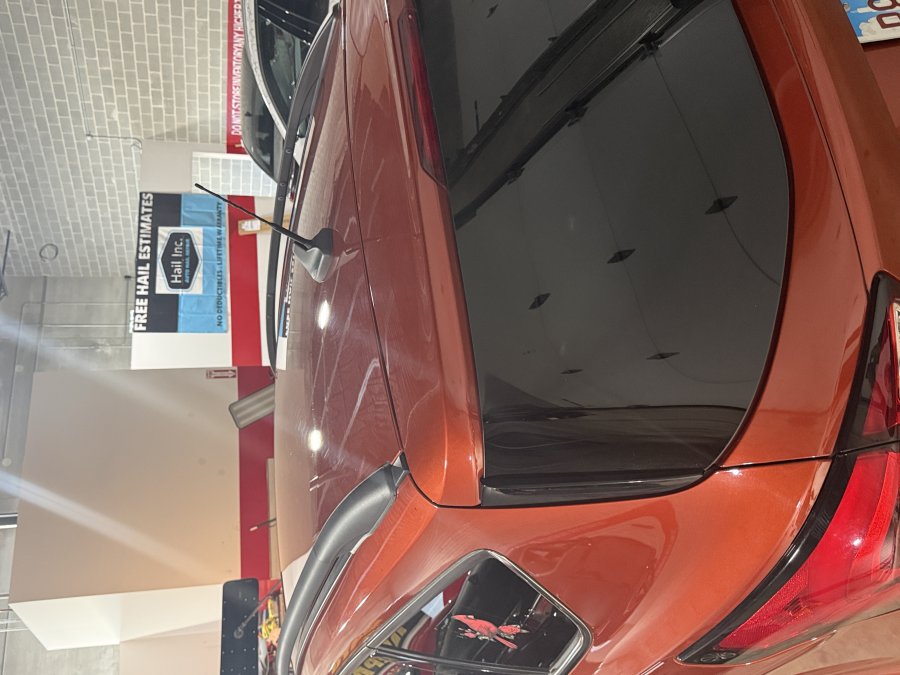
Depth tells technicians how far the metal has moved. Shallow dents have moved only a little, so the metal returns more easily. Deep dents have stretched the metal, which limits how far it can be pushed back.
Hail damage is often wide and shallow, which is one reason PDR is common for hail. Still, a cluster of deep dents on one panel can change the plan.
How Technicians Assess Dents for PDR
A technician generally checks several things during an assessment:
- Dent depth, measured by how far the metal sits from the surrounding surface
- Paint condition, including cracks, chips, and past repairs
- Panel location, since edges and body lines are harder to reach
- Metal type and thickness, which affects how the metal responds
Booking a Free PDR Assessment at Our Arvada Location
If you are not sure whether your dent is too deep for PDR, a professional look is the fastest way to find out. Bring your vehicle in and we will check the depth, paint, and panel condition, then explain what we see. You can also schedule an online appointment to get started.
Frequently Asked Questions
How deep can a dent be and still be repaired with PDR?
There is no single depth number that applies to every vehicle, because the metal gauge, panel shape and location all affect how far a dent can be pushed back. In general, shallow dents with smooth, uncreased metal are the best candidates. Deeper dents become harder to repair as the metal stretches or creases, and the technician must be able to reach the back of the panel with their tools. A professional assessment is the only reliable way to confirm whether a specific dent is within PDR limits.
Can paintless dent repair fix a sharp dent?
Sharp dents are often harder to repair with PDR than broad, shallow dents because the sharp edge can crease or crack the metal. Some sharp dents can still be improved with PDR, but if the metal is creased, the repair may not restore the panel fully. Sharp dents usually require a closer look before a decision is made about whether PDR is the right method.
Can PDR repair a dent if the paint is cracked?
PDR works by massaging the metal from behind, so it does not require the paint to be intact to push the dent out. However, cracked or chipped paint is a separate problem that PDR does not fix. If the paint is cracked along the dent, the area may need touch-up or refinishing after the metal is repaired, and the technician will evaluate this during the assessment.
Does dent depth matter more than dent size for PDR?
Depth usually matters more than size. A wide dent that is shallow and smooth is often easier to repair than a small dent that is deep or creased. Technicians look at how far the metal has been displaced and whether it has stretched, since these factors determine how much the panel can be reshaped without leaving visible distortion.