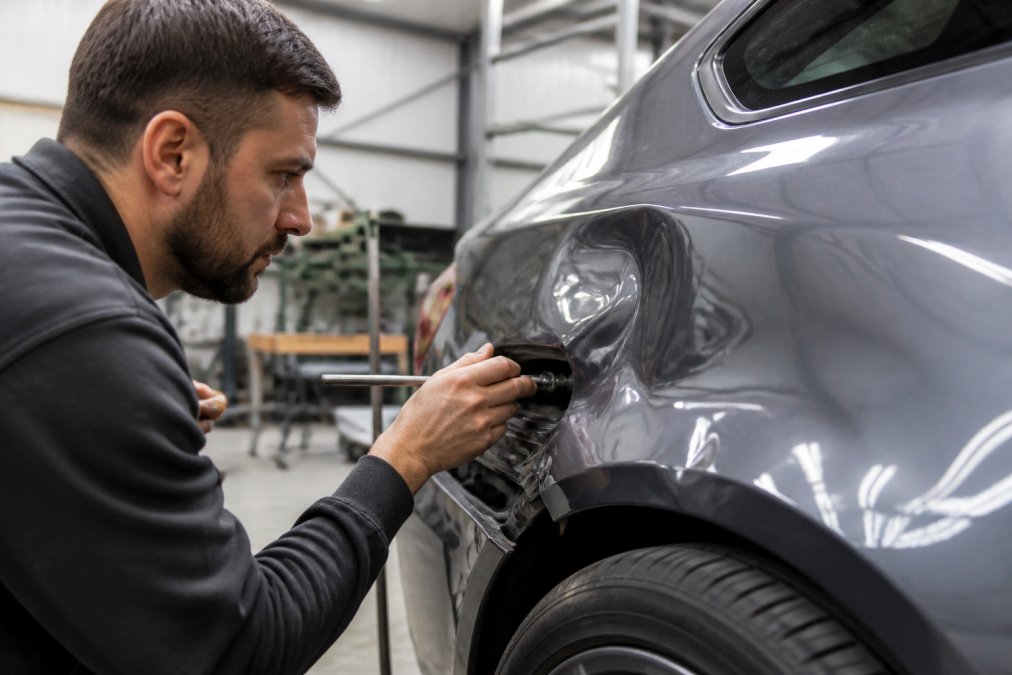
 how-to
Can PDR Fix Large Dents? Limits & Success Factors
Table of Contents
- What Counts as a 'Large Dent' for PDR?
- The Two Hard Limits: Paint Integrity and Metal Stretching
- Factors Affecting PDR Success on Big Dents
- PDR vs Traditional Body Shop Repair: Which One Handles Big Damage?
- How Long Does Paintless Dent Repair Take for Large Dents?
- A Visual Diagnostic Guide: Signs PDR Will Work
- DIY vs. Professional PDR: The Real Risk on Large Dents
- Conclusion: Getting a Professional Assessment
- Frequently Asked Questions
Last Updated: September 9, 2026
What Counts as a 'Large Dent' for PDR?
The short answer is yes, paintless dent repair can fix many PDR large dents, but only under specific conditions. The size of the dent matters less than the condition of the paint and whether the metal has been stretched. In the hands of a skilled technician, a dent spanning several inches across a door panel can often be restored to a factory finish without a single drop of body filler.
At Hail Inc., we evaluate each vehicle individually because the line between "repairable" and "replaceable" shifts with every impact. A dent is generally considered large for PDR purposes when it exceeds roughly the diameter of a standard dinner plate, typically around 10 to 12 inches across. However, that measurement alone doesn't determine the outcome. What matters is how the metal and paint responded to the impact, which brings us to the two hard limits every technician respects.
Before you schedule any repair, it helps to understand what PDR can and cannot do. Below, we'll walk through the physics of why some big dents come out perfectly while others require traditional auto body repair, and how to tell which category yours falls into.
The Two Hard Limits: Paint Integrity and Metal Stretching
Paintless dent repair is a technique that reshapes damaged metal back to its original contours without repainting, making it effective only when the paint remains intact and the metal has not been permanently stretched.
These two conditions are non-negotiable. If either one fails, PDR will not deliver a satisfactory result.
Paint integrity is the first gate. PDR relies on the factory paint acting as a flexible membrane that moves with the metal as it's pushed back into shape. If the impact cracked the paint, chipped the clear coat, or created surface markings that expose bare metal, the repair will fail because the paint will flake off during the reshaping process. Once paint is compromised, the panel needs traditional body shop work with body filler and a respray.
Metal stretching is the second, and often misunderstood, limit. When a dent forms, the metal can either bend or stretch. Bending preserves the metal's thickness and "memory," allowing a technician to coax it back. Stretching physically thins the metal, creating a larger surface area that cannot simply be pushed back into place. Stretched metal leaves a visible distortion even after the dent is removed, often appearing as a subtle wave or oil-can effect in the panel.
Factors Affecting PDR Success on Big Dents
Dent Size and Depth
Dent size alone is rarely the deciding factor. Depth matters more. A dent that is 10 inches wide but only a quarter-inch deep has an excellent chance of full repair. The same dent at a half-inch depth may involve metal stretching, particularly if the impact was sharp rather than gradual. Technicians assess depth and the angle of the impact to predict whether the metal will return to its original shape.
Location and Access Points
The location of the dent determines whether a technician can reach the back side of the panel. PDR requires access behind the damage to apply use with pushing tools. Large dents on hoods, roofs, and doors often have accessible access points through existing openings, trim removal, or window channels. Dents located along reinforced structural areas, such as door pillars or the edges of panels where metal is double-layered, may be impossible to reach without drilling, which PDR avoids.
Technician Skill Level
This is the variable that separates outstanding results from mediocre ones. A skilled dent technician uses a combination of pushing tools, glue pulling, and specialized lighting to gradually work the metal back. On large dents, the technician must read the metal's response, knowing when to apply more pressure and when to stop and reassess. Technician skill level directly determines whether a borderline large dent comes out flawless or shows subtle imperfections. According to the National Auto Body Council's guide to repair methods, the quality of PDR outcomes is heavily dependent on the technician's training and experience with the specific type of damage.
PDR vs Traditional Body Shop Repair: Which One Handles Big Damage?
The honest answer is that both methods have their place, and the choice depends on the specific damage. PDR preserves the factory finish, which is a significant advantage for resale value. When paint is intact and metal isn't stretched, PDR is almost always the better choice because it's faster, cost-effective, and leaves no trace of the repair.
Traditional auto body repair is necessary when paint is damaged or metal is stretched beyond recovery. The process involves sanding the panel, applying body filler to rebuild the contour, and repainting the section. This approach can handle any damage, but it introduces new risks: color matching across panels, potential for clear coat failure over time, and a longer turnaround time.
| Factor | PDR | Traditional Body Shop |
|---|---|---|
| Paint condition | Must be intact | Can be damaged |
| Metal stretching | Must be minimal | Can be significant |
| Turnaround time | Often same day to a few days | Multiple days to weeks |
| Cost | Generally lower | Generally higher |
| Factory finish | Preserved | Replaced |
| Best for | Hail damage, door dings, shallow dents | Collision damage, creases, deep impacts |
How Long Does Paintless Dent Repair Take for Large Dents?
A single PDR large dent typically takes between two and four hours to repair, though this varies with the dent's complexity and location. This is a fraction of the time required for traditional body work, which often means leaving your vehicle for several days.
The process itself is methodical. The technician first assesses the damage under specialized lighting to map the contours of the dent. They then access the back of the panel and begin the slow process of massaging the metal back into place, frequently checking their work against the surrounding body lines. Large dents require patience because rushing the process can cause the metal to overcorrect or create new distortions.
At Hail Inc., we often complete large-dent PDR repairs within a single day, which means most customers are back on the road quickly. For those who need their vehicle for work or family, we provide complimentary rental cars so the repair timeline doesn't disrupt your schedule.
Schedule an Online Appointment →
A Visual Diagnostic Guide: Signs PDR Will Work
You can evaluate your own dent before visiting a shop. Start by running your fingers over the damaged area. Feel for sharp edges or cracks in the paint. If the paint surface is smooth and continuous, even over the deepest part of the dent, PDR remains a strong candidate.
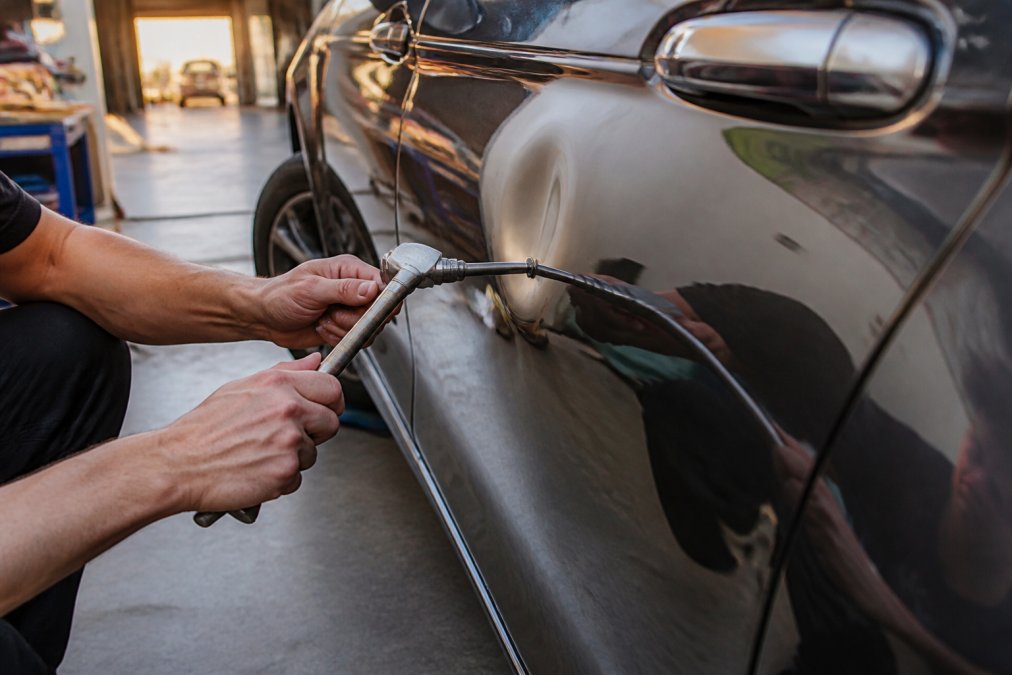
Next, examine the dent from different angles. Look for a sharp crease at the center of the impact. A crease indicates the metal folded sharply, which often leads to stretching. If you see a crease, particularly one with paint damage along the fold line, the dent may require traditional repair. If the dent is a smooth depression without a defined crease, the metal likely bent rather than stretched, and PDR has a high chance of success.
Finally, check the surrounding area for warping. Hold a straight edge across the panel. If the panel is flat except for the dent itself, the metal hasn't distorted beyond the impact zone. This is a positive sign. Widespread warping suggests the impact energy spread through the panel, which complicates PDR.
| Visual Sign | PDR Likely to Work | PDR May Fail |
|---|---|---|
| Smooth, continuous paint | Yes | No |
| Sharp crease at impact center | No | Yes |
| Paint cracks or chips | No | Yes |
| Localized depression | Yes | No |
| Widespread warping | No | Yes |
DIY vs. Professional PDR: The Real Risk on Large Dents
The appeal of DIY dent repair kits is understandable. They cost less upfront and promise to erase dents with a few tools and a tutorial video. On small door dings, a careful DIYer might achieve acceptable results. On large dents, the risk of making things worse is substantial.
DIY kits typically rely on glue pulling or basic suction methods. These work on shallow, flexible panels but lack the precision required for large dents. Applying too much force can stretch the metal further, turning a repairable dent into one that requires body filler and repainting. Without the specialized lighting and years of experience that professional dent technicians bring, you cannot see the subtle highs and lows that determine whether the panel is truly straight.
If you're tempted to try a DIY kit on a large dent, test on a small, inconspicuous area first. Better yet, get a professional assessment. A free inspection costs nothing and tells you definitively whether PDR is viable, saving you from potentially doubling your repair costs.
The real risk is financial. A DIY attempt that stretches the metal eliminates the PDR option entirely, forcing you into the more expensive body shop route. Professional PDR technicians train for years to develop the touch needed for large panels. That expertise is why insurance companies routinely approve PDR for hail damage and minor collision damage, as documented in the Insurance Institute for Highway Safety's research on repair methods. The cost difference between PDR and a body shop is often significant enough that a professional assessment is worth your time before attempting anything yourself.
Conclusion: Getting a Professional Assessment
Large dents present a genuine gray area in paintless dent repair. The good news is that many large dents, particularly those from hail or minor collisions, are excellent candidates. The deciding factors are always paint integrity, metal stretching, and the skill of the technician. A dent that appears hopeless to an untrained eye can often be restored flawlessly by an experienced professional.
The only way to know for certain is to have a certified technician evaluate the damage in person. At Hail Inc., we provide free inspections and work directly with your insurance company to manage the claim. Our certified technicians handle everything from minor door dings to major body panel repairs, backed by a lifetime warranty on our work. We also offer $0 out-of-pocket repairs when insurance covers the damage, complimentary rental cars, and valet pickup and drop-off so you never have to disrupt your schedule.
Schedule an online appointment with Hail Inc. and get a definitive answer on whether PDR can restore your vehicle to its pre-damage condition.
Frequently Asked Questions
How big of a dent can PDR fix?
There is no single inch limit. The deciding factor is the condition of the paint and whether the metal has been stretched. A dent the size of a dinner plate on a flat panel with intact paint can often be repaired. However, a sharp, creased dent the size of a quarter where the paint has cracked or the metal has been over-stretched will likely need a body shop. A professional on-site inspection is the only way to know for sure.
What dents cannot be removed with paintless dent repair?
Dents with cracked or chipped paint cannot be fixed with PDR because the process preserves the original factory finish, it does not restore damaged paint. Large dents with severe metal stretching, sharp creases across body lines, or damage where the panel is warped are also poor candidates. In those cases, the metal has lost its memory and needs body filler or panel replacement.
Is PDR considered a permanent repair for large vehicle damage?
Yes. When a certified technician successfully removes a large dent without cracking the paint, the repair is permanent. The original metal is massaged back into shape, so there is no filler to crack or shrink over time. Reputable providers back this with a lifetime warranty on the workmanship. This permanence is why PDR also preserves the vehicle's factory finish and resale value better than traditional methods.
How much does PDR cost for a large dent compared to traditional body work?
Pricing depends on the dent's size, depth, location, and the specific vehicle, so exact figures require a quote. Generally, PDR is more cost-effective than a traditional body shop because it avoids the labor and materials for body filler, sanding, and repainting. A large dent that requires repainting at a body shop will also involve paint-matching costs. Contact a PDR provider for a free estimate to compare the final price.