 how-to
How to Get Zero Deductible Hail Repair: 2026 Guide
Table of Contents
- What Zero Deductible Hail Repair Actually Means
- How Deductible Assistance Programs Work
- Deductible Assistance Explained: Is It Legal in Colorado?
- The Paintless Dent Repair Insurance Process, Step by Step
- Hail Damage Insurance Claim Tips for a Smoother Approval
- How to Pick a Hail Repair Shop That Handles Claims Directly
- Common Mistakes That Cost You Out of Pocket
- Conclusion
- Frequently Asked Questions
Last Updated: September 14, 2026
What Zero Deductible Hail Repair Actually Means
Zero deductible hail repair is a repair arrangement where a certified shop handles your insurance claim directly and absorbs your policy deductible, so you pay nothing out of pocket for covered hail damage. At Hail Inc., we've built our entire Denver operation around this model, and the questions we field most often are about how it actually works.
Here's the honest version: your insurance policy still carries a deductible. That number doesn't disappear. What changes is who pays it. A deductible assistance program means the repair shop credits the deductible amount back to you as part of the job, then recovers that cost through the insurance payout structure and their own pricing. You drive away without writing a check.
The catch most guides skip: this only works when the shop is set up to bill insurers directly and knows how to document a claim properly. Get that wrong and you're back to paying the deductible yourself.
Below, we'll walk through the legal picture, the claim process, and the specific mistakes that leave money on the table.
How Deductible Assistance Programs Work
A deductible assistance program is an arrangement where the repair facility waives or credits your out-of-pocket deductible as an incentive to win the job. The shop still collects the full repair cost from your insurer; the deductible portion comes out of the shop's margin, not your wallet.
Why would a shop do this? Volume. Hail season in the Denver metro area produces enough simultaneous claims that shops can absorb deductibles across hundreds of jobs and still profit. The trade-off is that you're trusting the shop to document the claim correctly, because a sloppy supplement means the shop eats more than it planned.
What most guides miss is that these programs vary wildly in quality. Some shops quietly cut corners on repair scope to make the math work. Others, like Hail Inc., build the deductible credit into a transparent estimate you see before work begins. Ask to see the estimate breakdown before you commit.
Deductible Assistance Explained: Is It Legal in Colorado?
Yes, deductible assistance is legal in Colorado, with one important condition: the shop cannot misrepresent the repair cost to your insurer to recover the waived amount. That would be insurance fraud.
The line is straightforward. A shop may choose to charge you less than the deductible, or credit it back. A shop may not inflate the claim submitted to your insurer to hide the fact that you didn't pay. Colorado's Division of Insurance regulates claim practices, and the Colorado Division of Insurance consumer resources spell out what policyholders and repair facilities can and cannot do.
In practice, this means legitimate programs are transparent about the arrangement. You'll see the deductible credit on your paperwork. If a shop is vague about how they're covering your deductible, that's your signal to walk.
One more thing worth knowing: your mortgage lender or lease agreement may have opinions about how claims are handled, especially on leased vehicles. Check before you authorize work.
The Paintless Dent Repair Insurance Process, Step by Step
The paintless dent repair insurance process follows a predictable sequence: file the claim, get an adjuster inspection, receive the estimate, authorize the shop, and let the shop handle supplements. Here's how each step actually plays out.
Filing Your Claim and Getting an Inspection
Start by filing with your insurer, either through their app or by phone. You'll get a claim number and an adjuster assignment. From there:
- Document the damage yourself. Photograph every panel with a coin or ruler for scale. Hail damage is subtle in photos, and your documentation backs up the adjuster's findings.
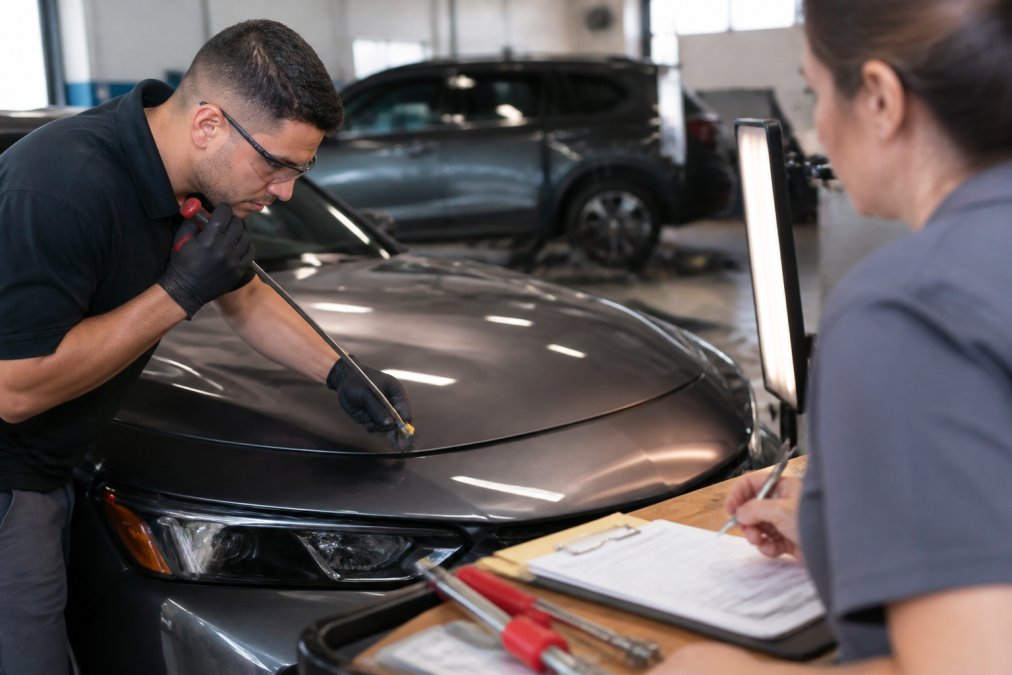
- Schedule the adjuster inspection. Many insurers allow the shop to inspect on your behalf, which speeds things up considerably. Hail Inc. offers on-site inspections at your home or office for exactly this reason.
- Review the estimate line by line. The adjuster's estimate covers a specific scope. If the shop finds additional damage during teardown, they file a supplement. This is normal and expected with hail.
- Authorize the repair. Once you sign, the shop coordinates directly with your insurer. You shouldn't be the messenger between them.
- Collect your vehicle. Confirm the warranty terms in writing before you leave.
Hail Damage Insurance Claim Tips for a Smoother Approval
Approval delays almost always trace back to documentation gaps, not coverage disputes. A few habits prevent most of them.
File promptly. Insurers have claim deadlines, and Colorado weather records help establish when damage occurred. Waiting weeks weakens your position.
Keep your vehicle unrepaired until the adjuster sees it. Washing is fine. Getting a head start on repairs is not, because the adjuster needs to see the original damage.
Be specific about non-visible damage. Hail can compromise seals, trim, and glass in ways that aren't obvious from the driver's seat. Mention anything you notice, even if it seems minor.
Finally, understand your policy's deductible structure before you file. Some policies carry separate deductibles for wind and hail versus other perils. Knowing your number up front means no surprises later. The Insurance Information Institute's guide to homeowners and auto claims covers how deductibles are typically structured across policy types.
How to Pick a Hail Repair Shop That Handles Claims Directly
The single biggest factor in whether you pay out of pocket is whether your shop manages the claim or hands it back to you. Choose accordingly.
Look for these signals:
| What to Check | Why It Matters | Red Flag |
|---|---|---|
| Direct insurer billing | Shop negotiates supplements for you | You're asked to front costs |
| Written deductible terms | Confirms the credit before work starts | Verbal promises only |
| Warranty documentation | Protects you if a repair fails later | No written warranty |
| Rental coverage | Keeps you mobile during repair | "We'll figure it out" |
| Local reputation | Hail work is regional expertise | Out-of-state storm chasers |
That last row matters more than people expect. Storm-chasing crews follow hail events and disappear when the season ends, which makes warranty claims impossible to pursue. A local shop with a physical address and a track record in the metro area is a safer bet.
Hail Inc. handles claims directly, provides complimentary rental vehicles, and offers valet pickup and drop-off so you're not rearranging your week around the repair. We also back our work with a lifetime warranty, which is only meaningful if the shop is still there in five years.
Better Business Bureau guidance on vetting auto repair shops is a reasonable starting point for checking complaint history before you commit.
Common Mistakes That Cost You Out of Pocket
The most expensive mistake is authorizing repairs before the adjuster inspects. Once work starts, your insurer has grounds to reduce or deny the claim.
Other costly missteps:
- Choosing a shop that doesn't bill insurers directly. You become the middleman, and supplements get missed.
- Skipping the written estimate review. Hidden line items surface as surprise charges.
- Ignoring the rental car question. Days without a vehicle add up, and "free rental" claims that aren't in writing rarely hold.
- Assuming all PDR work is equal. Technique and tooling vary. Ask about technician certification.
- Not reading the warranty. A lifetime warranty is only as good as the company standing behind it.
Conclusion
Navigating a hail claim shouldn't require a law degree or a spare afternoon. The process is predictable once you know the sequence, and the deductible question has a clear answer when you work with a shop that manages claims directly.
Hail Inc. was built for exactly this. We handle insurance claims on your behalf, offer $0 out-of-pocket repairs, provide complimentary rental vehicles even when your policy doesn't cover them, and back every repair with a lifetime warranty. Our certified technicians work on everything from minor dents to full body panel restoration, with valet pickup and drop-off so the repair fits around your schedule.
Schedule an online appointment with Hail Inc. and let our team handle the claim, the rental, and the repair while you get on with your week.
Frequently Asked Questions
Is it legal for a repair shop to waive my insurance deductible?
In most states, including Colorado, it is illegal for a shop to simply waive your deductible and bill your insurer for it. What shops can legally do is offer deductible assistance, where the shop absorbs or credits part of your deductible as a customer courtesy. This is different from insurance fraud, which involves misrepresenting the claim to your insurer. Always ask the shop to explain exactly how their program works before you sign anything.
How does deductible assistance work for hail damage claims?
Deductible assistance is a program where a repair shop covers part or all of your out-of-pocket deductible as a promotional or loyalty benefit. You still file the claim with your insurer, and the insurer still pays the covered amount minus your deductible. The shop then credits the remaining balance so your total out-of-pocket cost is zero. Ask for the terms in writing, including any conditions like using a specific repair method or timeline.
Does paintless dent repair qualify for insurance coverage?
Yes. Most major insurers cover paintless dent repair because it is often faster and less expensive than traditional body work. PDR works by massaging dents from behind the panel without sanding, filling, or repainting. If your vehicle has original paint and the dents are not too sharp or stretched, PDR is usually the preferred method. Your adjuster will confirm coverage during the inspection, and many shops handle this step for you.
Will filing a hail damage claim increase my insurance premiums?
Hail damage claims are typically classified as comprehensive claims, which are weather-related and not considered your fault. In many states, including Colorado, insurers cannot raise your premium solely because you filed a comprehensive claim. However, your overall claims history can still factor into future rates. Check your policy and ask your insurer directly about how a weather-related claim affects your specific premium.