
 how-to
How to File Auto Hail Claims in Denver
Table of Contents
- What to Do Immediately After a Hail Storm
- How to Document Vehicle Hail Damage for Your Claim
- Understanding Your Insurance Deductible for Hail Damage
- Steps to File an Insurance Claim for Hail Damage
- Working with Your Insurance Adjuster
- Paintless Dent Repair Benefits vs. Traditional Repair Methods
- Auto Hail Claim Timeline and Deadlines
- Frequently Asked Questions
Last Updated: September 18, 2026
What to Do Immediately After a Hail Storm
The first hours after hail damage are critical, especially when you file auto hail claims. Your actions now determine how smoothly your claim process goes later.
Stop driving the vehicle if you notice damage. Park it in a safe location, ideally under cover or in a garage.
Document the storm itself. Take photos of hail on the ground, fallen branches, or other environmental damage. This context helps your insurance adjuster understand the severity of the event.
Contact your insurance company within 24 hours. Most policies require prompt notification. Have your policy number ready and describe the damage briefly. Do not make assumptions about coverage yet.
Avoid temporary repairs. Do not try to hammer out dents or apply touch-up paint yourself. These actions can complicate your claim and reduce repair quality later.
Keep receipts for any emergency expenses. If you need a rental car or towing service immediately, save those documents.
How to Document Vehicle Hail Damage for Your Claim
Clear documentation is the foundation of a successful claim. Insurance adjusters rely on your photos and written descriptions to assess damage accurately.
Photograph the vehicle in natural daylight. Overcast days work best because harsh shadows can hide dents. Take wide shots showing the overall vehicle, then close-ups of each damaged area. Capture the dents from multiple angles so the adjuster sees the depth and size clearly.
Include reference objects in your photos. Place a coin, ruler, or common item next to dents to show scale. This helps the adjuster judge how severe each impact is.
Document all affected areas. Hail damage often appears on the hood, roof, trunk, doors, and windows. Check your windshield and side windows for cracks or pitting.
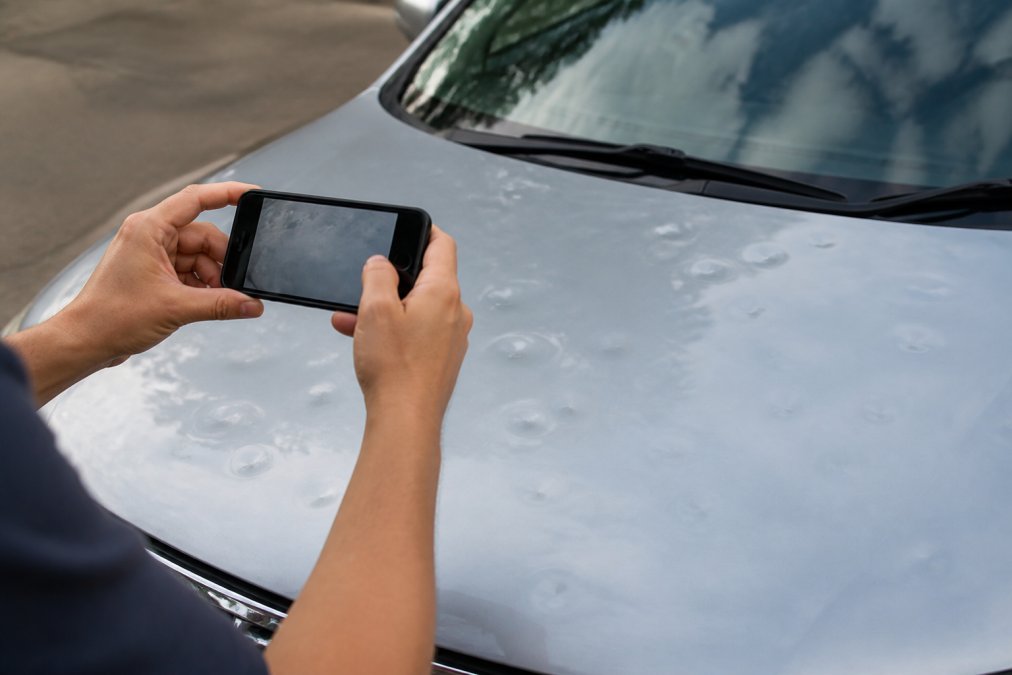
Write a detailed description. Note the date of the storm, the size of hail if you know it, and which areas were hit. Include the vehicle's mileage and current condition. This written record supports your photos.
Create a video walkthrough. Walk around the vehicle slowly while recording on your phone. Narrate what you see. Video provides context that still photos sometimes miss.
Store copies safely. Upload photos to cloud storage or email them to yourself. Keep originals on your phone or camera. Do not rely on a single copy in case you lose your device.
Understanding Your Insurance Deductible for Hail Damage
Your deductible is the amount you pay toward repairs before insurance coverage kicks in. Understanding this number is essential to planning your out-of-pocket costs.
Check your policy documents. Most auto policies list your deductible clearly. Common amounts vary, though some policies have lower or higher deductibles. Comprehensive coverage typically covers hail damage, so your comprehensive deductible applies.
Deductibles work per claim, not per dent. If your deductible is $1,000 and hail damage totals $8,000, you pay $1,000 and insurance pays $7,000. You do not pay the deductible for each damaged panel.
Some insurers offer deductible waiver programs. These programs reduce or eliminate your deductible if you use their preferred repair network. Ask your insurance company whether this option is available. Many people do not know this benefit exists.
Consider your vehicle's repair costs. Minor hail damage might cost less than your deductible. In those cases, filing a claim may not make financial sense.
Filing a hail claim can raise your insurance rates at renewal. Ask your insurer what impact a claim will have on your specific policy before you file.
Steps to File an Insurance Claim for Hail Damage
When you file auto hail claims, the process is straightforward if you follow the right steps. Most insurers now allow online filing, which speeds things up.
Step 1: Gather your documentation. Collect your policy number, vehicle identification number (VIN), photos, and written descriptions. Have your claim hotline number ready.
Step 2: Contact your insurance company. Call the claim hotline or log into your online portal. Provide the date of the storm, location, and a brief description of the damage. The representative will open a claim file and assign a claim number.
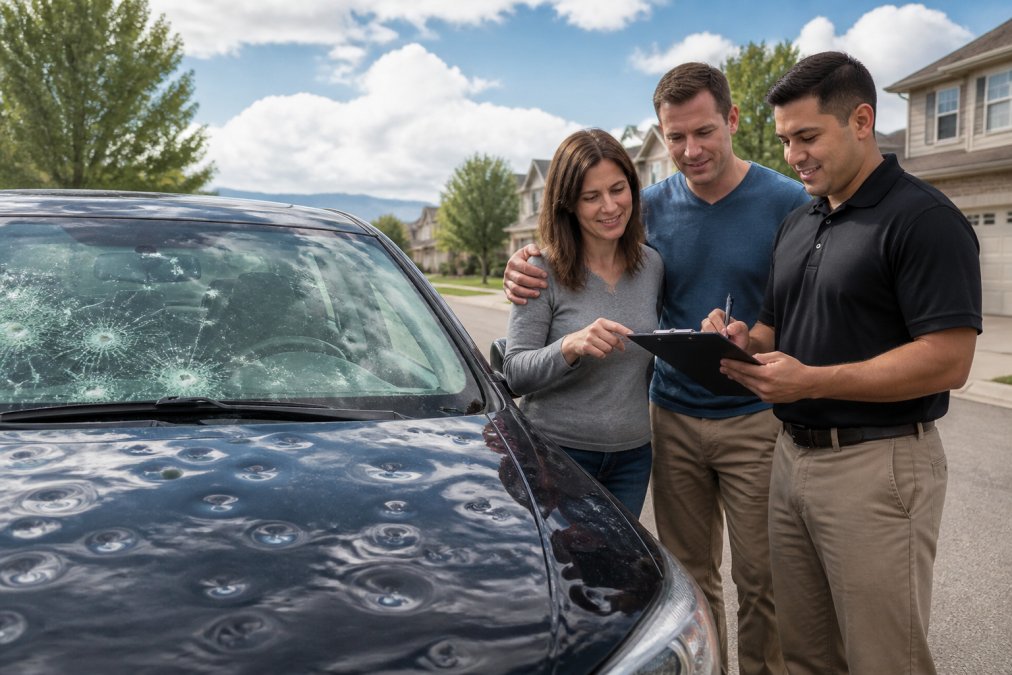
Step 3: Request an inspection. Your insurer will schedule an appointment with an insurance adjuster. The adjuster visits your vehicle to assess damage and estimate repair costs. This appointment typically happens within a few days.
Step 4: Provide your documentation. Send your photos and written description to the adjuster before the inspection if possible. This helps the adjuster prepare and understand the scope of damage.
Step 5: Review the adjuster's estimate. The adjuster provides a repair estimate based on the inspection. If you disagree with the estimate, you can request a second opinion or provide your own estimate from a repair shop.
Step 6: Approve repairs and schedule work. Once you accept the estimate, approve the repair plan. Your insurance company will coordinate with the repair shop or you can choose your own shop.
Step 7: Pay your deductible. When repairs begin, you pay your deductible to the repair shop. Insurance pays the remaining amount directly to the shop.
Step 8: Track repair progress. Stay in contact with your repair shop. Ask for updates on timeline and any additional damage discovered during the repair process.
Most claims move from filing to completed repairs within a few weeks. Delays can occur if the repair shop is backed up or if additional damage is discovered.
Working with Your Insurance Adjuster
Your insurance adjuster is the key person in your claim process. Building a good working relationship helps your claim move smoothly.
Be honest and thorough. Tell the adjuster about all damage you have noticed. Do not exaggerate or claim damage that did not occur from the hail storm. Adjusters have experience and can spot inconsistencies. Maintaining a clear and consistent account of the event remains the most effective strategy when dealing with insurance adjusters throughout the evaluation process.
Provide your documentation early. Hand the adjuster your photos and written description at the start of the inspection. This gives them context and shows you are organized.
Ask questions during the inspection. Understand what the adjuster is looking for and why. If something seems unclear, ask for explanation. You have the right to understand how the damage assessment works.
Request a detailed written estimate. The adjuster should provide a clear breakdown of repair costs by part and labor. Review this estimate carefully before approving it.
Know your rights. You can dispute the adjuster's estimate if you believe it is inaccurate. You can hire your own appraiser or get a second opinion from a repair shop. Some policies allow for supplemental claims if additional damage is found during repairs.
Paintless Dent Repair Benefits vs. Traditional Repair Methods
Paintless Dent Repair (PDR) is a specialized technique that removes dents without repainting. Understanding how it compares to traditional methods helps you choose the right repair approach.
Paintless Dent Repair uses tools to gently push dents out from behind the panel.
| Repair Method | Time | Paint Preservation | Best For | Cost Range |
|---|---|---|---|---|
| Paintless Dent Repair | 1-3 days | Original intact | Small to medium dents | Lower |
| Traditional Body Repair | 1-2 weeks | Repainted | Severe damage, creases | Higher |
Auto Hail Claim Timeline and Deadlines
Understanding the timeline helps you manage expectations and avoid missing important deadlines. Hail claims typically follow a predictable schedule.
Important Deadlines:
- File your claim within 30 days of the storm (required by most policies)
- Provide documentation within 60 days (varies by insurer)
- Complete repairs within 6-12 months (check your policy)
Frequently Asked Questions
How long do I have to file a hail damage claim on my car?
Colorado law sets a statute of limitations for filing auto hail claims. Most insurance policies require you to report hail damage within 1-3 years, though the exact deadline depends on your policy and state regulations. The sooner you file, the stronger your documentation will be, especially if you have photos taken shortly after the storm. Contact your insurer immediately after a hail event to confirm your specific deadline and begin the claim process.
Will my car insurance premiums increase if I file a hail claim?
Hail claims are typically treated as comprehensive claims, not at-fault accidents, so they often have minimal impact on your premium increase compared to collision claims. However, filing any claim can affect your rates depending on your insurer's policies and your claims history. Some insurers offer accident forgiveness programs that prevent rate increases after your first claim. Before filing, ask your insurance company how the claim will affect your premium so you can make an informed decision about whether to claim or self-pay.
What documentation do I need to provide for an auto hail claim?
Your insurer will need clear photos of hail damage from multiple angles, your insurance policy details, repair estimates from certified repair shops, and proof of loss (proof you own the vehicle). Detailed photos showing the extent of damage are critical, capture close-ups of dents alongside wide shots showing the overall damage pattern. Keep receipts for any temporary repairs and maintain a written timeline of when the damage occurred and when you reported it. Your insurance adjuster will guide you on additional documentation needed.
What is the difference between paintless dent repair and traditional body shop repair for hail damage?
Paintless Dent Repair (PDR) removes dents without repainting, preserving your vehicle's original factory finish and resale value. Traditional body shop repair involves sanding, filling, and repainting affected areas, which can affect paint matching and long-term durability. PDR is faster, typically completed within days, while traditional repairs may take weeks. PDR is ideal for hail damage because it addresses the dents directly without chemical treatments. Many insurance companies prefer PDR for comprehensive hail claims because it's cost-effective and maintains your vehicle's original condition.