 ultimate-guide
Auto Hail Repair Process Explained: 2026 Guide
Table of Contents
- What Is Paintless Dent Repair (PDR)?
- How Long Does Hail Damage Repair Take?
- Working With Insurance for Hail Claims
- Conventional vs. Paintless Repair Methods
- Hail Damage Repair for Leased Vehicles
- Factors Influencing Repair Time and Cost
- The Auto Hail Repair Process Step-by-Step
- Restoring Vehicle Value and Safety
- Frequently Asked Questions
Last Updated: September 22, 2026
What Is Paintless Dent Repair (PDR)?
Paintless dent repair is a technique that removes dents and dings from vehicle body panels without sanding, filling, or repainting. This method uses specialized tools and use points to carefully manipulate metal back to its original shape while preserving the factory finish. PDR works best on hail damage because hail typically creates shallow to medium-depth dents across multiple panels, and the metal hasn't been creased or cracked.
The process relies on metal memory, the natural tendency of vehicle panels to return to their original shape when properly manipulated. Technicians access the back side of panels through existing openings, then use precision tools to apply pressure from behind, gradually working the dent outward. Because the original paint stays intact, your vehicle's factory finish, clear coat, and structural integrity remain unchanged.
Hail Inc. specializes in paintless dent repair for vehicles across the Denver metro area. This approach is particularly valuable for hail damage claims because it restores your vehicle to pre-loss condition without the time and expense of traditional body work. Insurance companies often prefer PDR because it's faster, more cost-effective, and preserves your vehicle's original factory specifications.
How Long Does Hail Damage Repair Take?
Repair timeline depends on damage severity, panel count, vehicle age, and technician availability.
Repair Timeline by Damage Severity
Minor hail damage (1-3 panels) typically takes 1-3 business days on easily accessible areas.
Moderate damage (4-15 panels) usually requires 3-7 business days with careful sequencing across varied panel geometries.
Severe damage (20+ panels) may take 2-4 weeks; peak season backlogs can reach 4-6 weeks.
Modern Vehicle Complications: ADAS and Sensor Systems
Modern vehicles feature Advanced Driver Assistance Systems (ADAS) with sensors in hoods, bumpers, and fenders. When hail damage affects sensor-equipped panels, repair timelines extend significantly.
ADAS sensor recalibration adds 1-3 business days. Technicians use specialized diagnostic equipment to verify alignment and functionality; some vehicles require dynamic calibration at specific speeds. Skipping this step risks disabling safety features or triggering warning lights.
Older vehicles without ADAS repair faster. Luxury and newer vehicles with multiple sensor systems require extended calibration time.
Factors That Extend or Reduce Timeline
Panel accessibility significantly affects speed. Hood, door, and roof dents repair faster than quarter panels or structural areas requiring disassembly.
Dent depth and size matter more than count. Shallow dents (under ¼ inch) respond quickly; deeper creases require multiple passes.
Paint condition influences method selection. Cracked or chipped paint requires conventional repair, adding 3-5 days; PDR-only repairs skip these steps.
Supplemental damage discovery can extend timelines unexpectedly. Hidden stress cracks, paint damage, or structural issues discovered during work trigger supplemental estimates, potentially adding 2-7 days.
Shop workload and scheduling directly impact wait time. Peak season (late spring and summer) can create 2-3 week delays; priority scheduling may accelerate timelines.
Weather conditions can delay scheduling and cure times, affecting overall timeline.
Realistic Expectations for 2026 Vehicles
For a typical vehicle with moderate hail damage (8-12 panels) and ADAS sensors, expect 5-10 business days total: inspection (1 day), repair (3-5 days), sensor recalibration (1-3 days), quality assurance (1 day). Extensive damage or conventional repair adds 7-14 days.
Communicate timeline needs with your repair shop. Many provide daily updates and adjusted estimates as work proceeds.
Working With Insurance for Hail Claims
Initial Damage Inspection and Assessment
Your claim begins with a thorough vehicle inspection. An adjuster documents damage, photographs it, and estimates repair costs against your policy's coverage limits and deductible.
You can request a second inspection if you disagree with the adjuster's assessment. Hail Inc. provides detailed damage assessments documenting every dent and its dimensions.
Your deductible is what you pay before insurance coverage begins. Hail claims typically fall under comprehensive coverage, which often has lower deductibles. Understanding your policy details prevents surprises.
Filing Your Claim and Documentation
Contact your insurance company within 24-48 hours of hail damage. Document everything with photographs and video from multiple angles showing the damage pattern.
Gather your policy, registration, proof of ownership, and repair estimates. Keep records of all communication with your insurer, including claim numbers and adjuster names.
The supplemental estimate process covers hidden damage discovered during repair work, ensuring complete restoration.
Conventional vs. Paintless Repair Methods
Choosing between PDR and conventional repair affects timeline, cost, resale value, and insurance history.
How Each Method Works
Paintless dent repair uses specialized tools to manipulate metal from behind panels, gradually working dents outward without removing paint. Technicians access panel backs through existing openings. Because original paint stays intact, factory finish and structural integrity remain unchanged.
Conventional body repair involves sanding, applying body filler, priming, and repainting. This method works when metal is creased, cracked, or too severely damaged for PDR.
Resale Value Impact: The Hidden Cost of Conventional Repair
PDR-repaired vehicles retain significantly more resale value than conventionally repaired ones, even with excellent repair quality.
When Each Method Is Appropriate
PDR is ideal for: shallow dents without paint damage, creases without metal cracks, multiple small dents, vehicles prioritizing resale value, and situations where you want to avoid history report flags.
Cost and Timeline Comparison
PDR can be more cost-effective than conventional repair. PDR completes in 3-7 days; conventional repair takes 10-14 days due to drying and curing time.
The Hybrid Approach
Many shops use both methods on the same vehicle. PDR handles most hail dents; conventional repair addresses cracked metal or damaged paint. This hybrid approach maximizes resale value while ensuring structural integrity.
Making Your Decision
Prioritize PDR if your vehicle is newer, you plan to keep it long-term, or resale value matters. Discuss both options with your adjuster and repair shop. Request that your estimate specify which panels receive PDR and which receive conventional repair.
Hail Damage Repair for Leased Vehicles
Lease agreements typically require maintaining the vehicle in good condition and repairing damage promptly. Hail damage usually falls under normal wear and tear, so your lessor's insurance should cover repairs.
Factors Influencing Repair Time and Cost
Damage extent is the primary factor affecting timeline and cost. Larger dents and deeper creases require more manipulation time. Panel accessibility influences cost; easily accessible panels repair faster.
The Auto Hail Repair Process Step-by-Step
Step 1: Vehicle Inspection and Damage Documentation
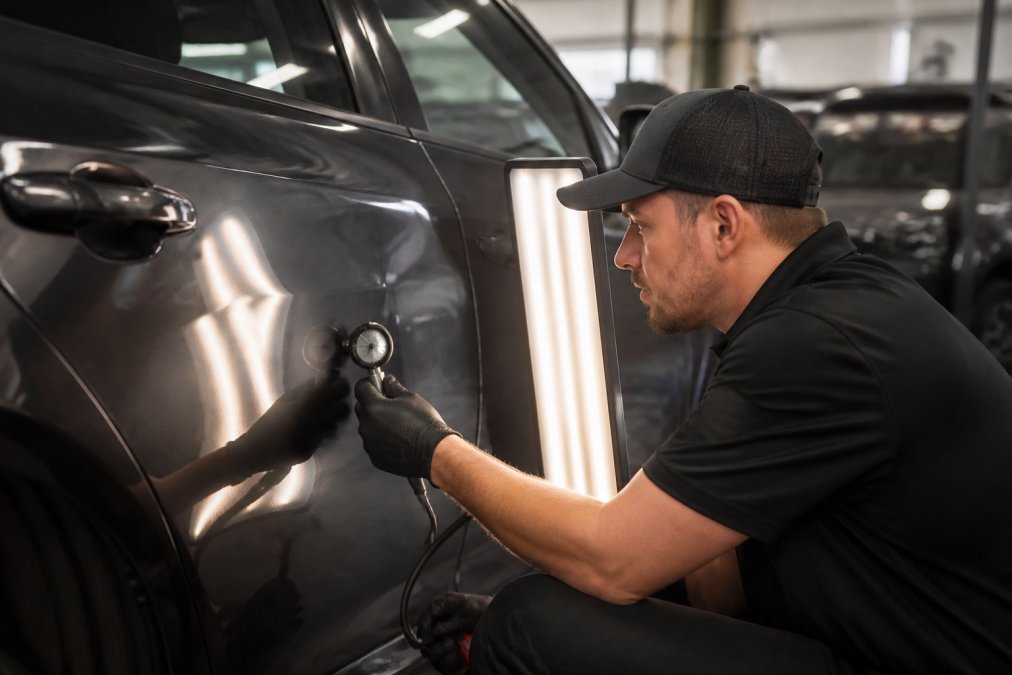
The repair process begins with comprehensive damage assessment. Technicians examine every panel, document dent locations and dimensions, and photograph damage from multiple angles to support your claim.
Step 2: Repair Planning and Technology Assessment
Technicians create a repair plan identifying access points, tool requirements, and repair sequencing. Modern vehicles with ADAS sensors require special planning to avoid damage during repair.
Step 3: Repair Execution and Quality Assurance
Technicians begin repair work using specialized tools, dent rods, glue pulling systems, and precision hammers designed for PDR. They work methodically, manipulating metal gradually to avoid over-correction. The process requires patience and expertise because rushing can damage the paint or create new dents.
Restoring Vehicle Value and Safety
Hail damage significantly impacts vehicle resale value if left unrepaired. Buyers perceive dented vehicles as poorly maintained or structurally compromised, even when damage is purely cosmetic. Repairing hail damage before selling protects your investment and maintains the vehicle's market value.
Frequently Asked Questions
What is the difference between traditional repair and Paintless Dent Repair (PDR)?
Paintless Dent Repair uses specialized tools and techniques to remove dents without sanding, filling, or repainting. Traditional repair involves body filler, sanding, and clear coat application. PDR preserves your vehicle's factory finish and paint integrity, maintains OEM quality, and typically costs less. PDR works best on dents without paint damage, while severe damage may require conventional body work.
How long does it typically take to complete professional hail repair?
Repair timeline depends on damage severity. Minor hail damage with small dents may take 1-3 days. Moderate damage across multiple panels typically requires 3-7 days. Extensive hail storm damage can take longer. Our technicians provide continuous updates throughout the repair process so you know exactly where your vehicle stands.
What is the process for filing an insurance claim for hail damage?
Start with a vehicle inspection by a certified technician who documents all damage with photos and measurements. Your adjuster reviews the damage assessment and supplemental estimate. We handle direct communication with your insurance company to manage the claim process. Once approved, repairs begin immediately. Working with an experienced team eliminates confusion and ensures your claim covers all necessary work without surprise deductibles.
Does filing a hail claim affect my insurance premiums?
Filing a hail damage claim typically does not increase your insurance premiums because hail is considered an act of nature, not a collision. Most insurance companies treat comprehensive claims (which cover hail damage) differently from at-fault incidents. However, premium impacts vary by insurer and policy. Contact your insurance agent directly to confirm how a hail claim affects your specific policy.
What should I know about hail damage repair for leased vehicles?
Leased vehicles require special attention because you must return them in original condition. Hail damage repair for leased vehicles should use PDR when possible to preserve the factory finish and maintain OEM specifications. Lease agreements typically require comprehensive insurance coverage that includes hail damage. Work with a repair shop experienced in leased vehicle requirements to ensure repairs meet lessor standards and documentation.
How do insurance adjusters evaluate hail damage on a vehicle?
Adjusters inspect the vehicle for impact patterns, dent size and depth, paint integrity, and whether the factory finish remains intact. They use paint thickness gauges to confirm original coating. They assess whether damage affects structural integrity or safety systems like ADAS sensors on modern vehicles. Professional technicians provide supplemental estimates that document all visible damage, helping adjusters make accurate coverage decisions.
Will paintless dent repair actually preserve my car's resale value better than traditional body shop work?
Yes. PDR preserves your vehicle's factory finish and paint integrity, which buyers and appraisers value highly. Traditional body work involving sanding, primer, and clear coat can affect long-term paint durability and appearance. Vehicles with original factory finishes command higher resale prices. PDR also maintains OEM specifications without aftermarket parts, making your vehicle more attractive to buyers concerned about quality and authenticity.