 ultimate-guide
Does PDR Restore Resale Value? A 2026 Guide
Table of Contents
- How Paintless Dent Repair Restores Resale Value
- Paintless Dent Repair vs. Traditional Repair: Impact on Vehicle Value
- How to Remove Hail Dents Without Paint Damage
- PDR Process for Insurance Claims and Value Preservation
- Why Factory Paint Matters for Resale Value
- Does PDR Show Up on Vehicle History Reports?
- Common Misconceptions About PDR and Resale Value
- Conclusion: Making the Right Choice for Your Vehicle
- Frequently Asked Questions
Last Updated: September 30, 2026
How Paintless Dent Repair Restores Resale Value
Paintless dent repair (PDR) preserves your vehicle's original factory finish, and PDR restore resale value by maintaining one of the most important factors affecting what your vehicle is worth. When you sell or trade in a car, buyers and dealers scrutinize the paint condition closely, any sign of repainting signals previous damage and immediately reduces what your vehicle is worth. PDR avoids this problem entirely by removing dents without touching the paint layer.
The resale value impact is straightforward: a car with factory paint commands a higher price than one with any repainting history. Even if the original repair was flawless, the fact that it happened is permanently recorded. PDR sidesteps this by working from behind the panel, using specialized tools to massage the metal back into shape while the original paint remains untouched and intact.
At Hail Inc., we've worked with vehicle owners across Arvada and the surrounding Denver metro area who were concerned about hail damage affecting their cars' market value. The decision to pursue PDR versus traditional body shop repairs often comes down to one question: which approach preserves what your vehicle is actually worth when you're ready to sell?
Paintless Dent Repair vs. Traditional Repair: Impact on Vehicle Value
The difference between PDR and conventional body shop work comes down to paint. Traditional repair involves sanding, filling, and repainting affected areas. This process, while effective at removing dents, creates a permanent record that shows up in vehicle history reports and becomes visible under close inspection or in certain lighting.
PDR leaves no trace. The original factory paint remains completely intact, which means there's nothing to disclose and nothing for a future buyer to question. Your vehicle's history stays clean, and its resale appeal stays high.
When you compare paintless dent repair vs. traditional repair, the resale value advantage favors PDR every time. A buyer running a pre-purchase inspection or checking the vehicle history report will see no evidence of previous damage. This matters because it eliminates buyer skepticism and maintains the vehicle's perceived condition.
Traditional repair has its place, for severe damage that PDR can't address, body shop work is necessary. But for hail damage, minor to moderate dents, and impact damage that hasn't broken the paint, PDR is the value-preserving choice. The fact that Hail Inc. works directly with insurance companies means you can often get this superior repair method covered without out-of-pocket costs.
How to Remove Hail Dents Without Paint Damage
The technique behind removing hail dents without paint damage is what makes PDR so effective for resale value. Technicians access the back side of the damaged panel and use specialized tools to apply precise pressure, gradually working the metal back to its original shape. The process requires skill and experience, the goal is to restore the panel's contour without overstressing the metal or disturbing the paint surface.
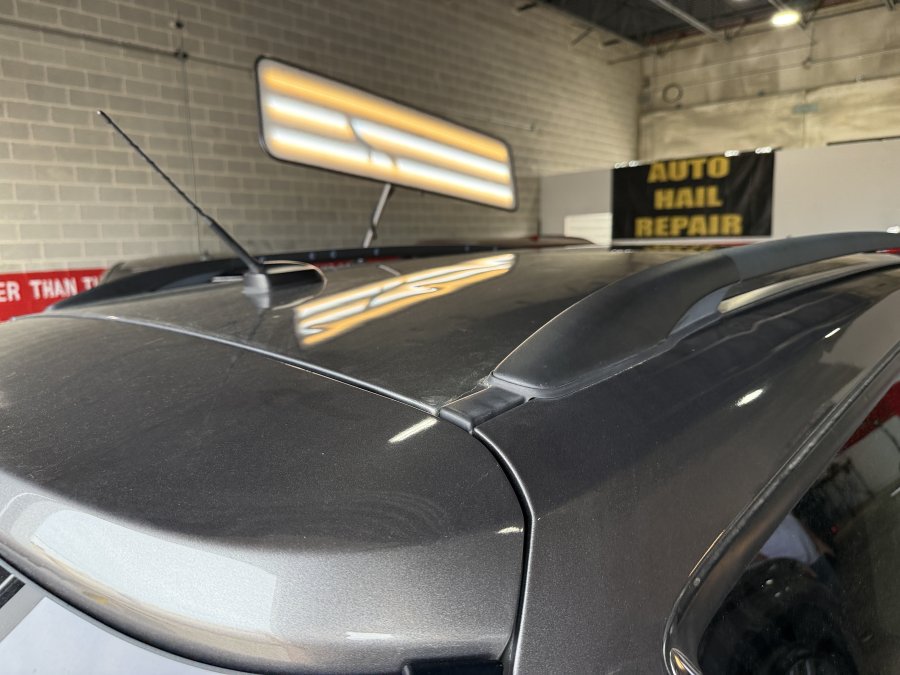
The key to successful hail dent removal is understanding that metal has memory. When struck, it deforms but wants to return to its original shape. A skilled PDR technician uses this property, applying carefully calibrated force from behind the panel to encourage the metal back into place. This is why the process preserves paint, nothing abrasive touches the surface, no grinding occurs, and no filling or sanding is needed.
For hail damage specifically, PDR is ideal because hail creates numerous small to medium dents across large areas of the vehicle. Each dent can be addressed individually, and the cumulative effect is a vehicle that looks completely restored. The process, once complete, ensures your car shows no evidence that damage ever occurred.
Hail Inc. technicians in Arvada and surrounding areas use this method exclusively for hail damage because it delivers results that traditional repair simply cannot match in terms of preserving value. The fact that the original paint remains untouched means your vehicle maintains its factory condition status.
PDR Process for Insurance Claims and Value Preservation
When hail damage occurs, the path to restoring your vehicle's value starts with the insurance claim. Many vehicle owners worry about the claims process, but understanding how PDR fits into insurance coverage can simplify everything.
Most comprehensive insurance policies cover hail damage, and PDR is typically approved by insurers because it's cost-effective and non-invasive. When you file a claim, the insurance company sends an adjuster to assess the damage. For PDR-eligible damage, the adjuster approves the repair, and you move forward with a certified technician.
The value preservation aspect becomes critical here. Because PDR doesn't involve repainting or body work, the repair doesn't get flagged in vehicle history reports the same way traditional body shop work might. This means when you eventually sell the vehicle, there's no permanent record of the hail damage in its history.
Hail Inc. simplifies this process by working directly with your insurance company. We handle the claim communication, manage the repair process, and ensure everything is documented properly.
Why Factory Paint Matters for Resale Value
Factory paint is the single most important factor in vehicle resale value after mechanical condition. When manufacturers paint a vehicle at the factory, they apply multiple layers in a controlled environment, creating a finish that's nearly impossible to replicate in a body shop setting.
Does PDR Show Up on Vehicle History Reports?
This is one of the most important questions vehicle owners ask, and the answer directly affects resale value. Vehicle history reports, the records pulled by buyers and dealers, typically only document repairs that involve repainting, body shop work, or structural damage.
Common Misconceptions About PDR and Resale Value
Several myths about PDR circulate among vehicle owners, and these misconceptions often lead people to choose traditional repair when PDR would better serve their interests.
Conclusion: Making the Right Choice for Your Vehicle
Does PDR restore resale value? Yes, by preserving factory paint and keeping your vehicle's history clean, PDR protects what your vehicle is worth when you're ready to sell or trade it in.
Frequently Asked Questions
Does paintless dent repair show up on a Carfax report?
PDR does not typically appear on Carfax or other vehicle history reports because the repair does not involve repainting or structural damage. Since no paint is removed or replaced, the vehicle retains its original factory finish. This is one of the key advantages for resale value, buyers see a clean history with no evidence of major body work. However, if the damage was reported to your insurance company, that claim may appear in records depending on how it was filed.
Is paintless dent repair considered a permanent repair for hail damage?
PDR is a permanent repair when performed correctly by certified technicians. The process restores the metal to its original shape without weakening the structure or compromising the paint. Unlike temporary solutions, PDR addresses the dent at its source rather than covering it up. Many shops, including Hail Inc., back their work with lifetime warranties, giving you confidence that the repair will hold up for years and protect your resale value.
How does PDR compare to traditional body shop repairs for resale value?
PDR preserves resale value better than traditional repairs because it maintains the original factory paint. Traditional body shops often sand, prime, and repaint affected areas, which can affect paint matching and durability. Buyers and appraisers value original factory finishes, even repaired ones look like factory work under PDR. When selling, a vehicle with PDR repairs typically commands a higher price than one with repainting, since the original paint is a major value indicator.
Will insurance companies cover PDR for hail damage?
Most comprehensive insurance policies cover PDR for hail damage. Since PDR is often more affordable than traditional repairs and doesn't require repainting, insurers frequently approve it. The key is working with a shop that handles insurance claims directly. Hail Inc. manages the entire claim process, coordinating with your insurance company so you avoid surprise costs. Always check your policy details, but PDR is widely recognized as a legitimate, covered repair method.
Does keeping the original factory paint increase a car's value?
Yes, original factory paint is one of the strongest indicators of a vehicle's condition and significantly impacts resale value. Buyers and appraisers view original paint as proof that the car has not undergone major body work or repainting. PDR preserves this advantage by removing dents without touching the paint. A car with original factory paint, even with PDR repairs, will appraise and resell higher than one with repainted panels, making PDR the smarter choice for long-term value.
Can PDR fix all types of hail damage?
PDR works best on dents that haven't damaged the paint or creased the metal severely. Most hail damage falls into this category, making PDR suitable for the majority of cases. However, very large dents, creases, or damage with paint cracks may require traditional repair. A certified technician can assess your vehicle and recommend the best approach. Hail Inc.'s technicians evaluate each vehicle individually to determine whether PDR alone will restore it or if additional work is needed.
How long does a PDR repair take?
PDR repairs are typically faster than traditional body shop work. Since there's no painting, curing, or sanding time, the vehicle is ready sooner. This speed is another advantage for your resale value timeline, you can address damage quickly without extended downtime. Hail Inc. offers convenient valet service, so you can continue your routine while repairs happen.