 How-to
Factors That Influence PDR Repair Time on Hail Damage
Last Updated: November 4, 2026
Quick Summary
PDR repair time depends mainly on dent size and depth, the number of dents, and where they sit on the vehicle. Shallow, isolated dents on flat, accessible panels move fastest, while deep dents near edges or behind trim take longer. Ask any shop for labor hours and calendar days separately.
- Labor time counts hands-on hours, while calendar time counts total days from drop-off to pickup.
- Shallow, isolated dents move through the process fastest.
- Dents near roof edges, body lines, or window frames usually take longer than those on flat panels.
- Removing trim adds steps at both ends of the job and can slow the repair.
- For hail damage, insurance approval and scheduling backlogs can add more days than the labor itself.
Table of Contents
- How PDR Repair Time Is Measured
- Dent Size, Depth, and Number of Dents
- Dent Location and Panel Accessibility
- Metal Type, Vehicle Make and Model, and Paint Condition
- How Long Paintless Dent Repair Takes for Hail Damage
- How Long Does Paintless Dent Repair Take Overall?
- Getting a Reliable PDR Repair Time Estimate in Arvada
- Booking Your Hail Damage Repair With Hail Inc.
- Frequently Asked Questions
How PDR Repair Time Is Measured
Paintless dent repair (PDR) time is the number of hands-on hours a technician spends removing a dent. Most shops also track the calendar days a vehicle stays in their care, which can be longer because of parts, scheduling, and paperwork. Knowing the difference helps you read any estimate you receive.
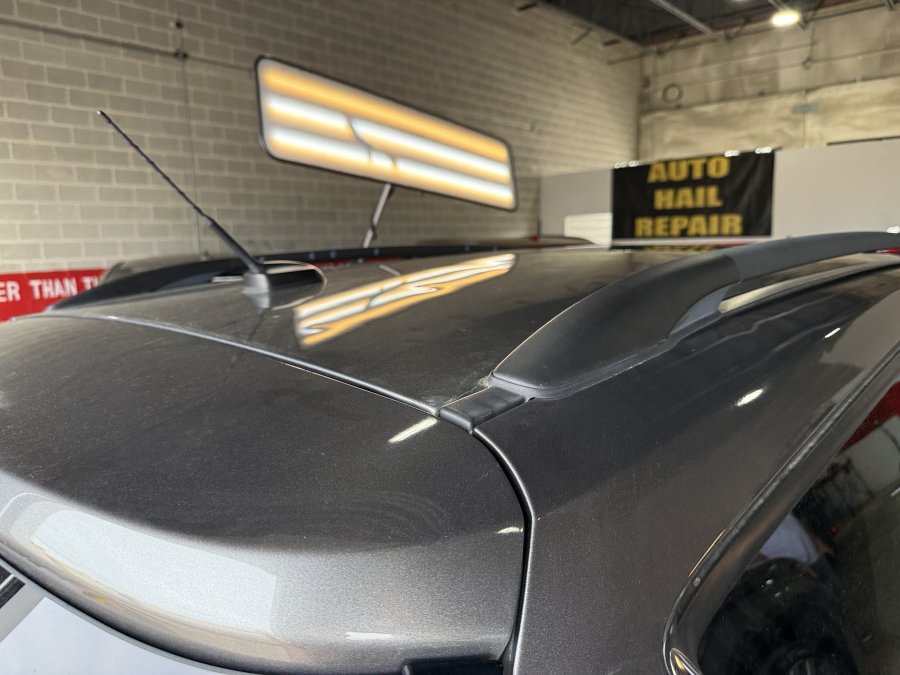
At Hail Inc., we give customers both numbers so there are no surprises. Ask any shop whether its estimate covers labor hours, total days, or both.
Hail Inc. technicians work on the dent itself, so the clock starts when the panel is ready to work. Hail damage often covers many panels, which is why a quick look at the vehicle matters before any timeline is promised.
- Labor time: hours spent pushing and shaping metal.
- Calendar time: total days from drop-off to pickup.
- Assessment time: the walk-around that counts every dent and panel.
Dent Size, Depth, and Number of Dents
Size and depth are the first things a technician checks. Large dent limits explains where PDR works well on big dents and what factors determine success. A shallow dent the size of a coin usually takes less time than a deep dent across a whole door. Small dent repair time covers how long individual small dents take to repair. Depth tells the technician how much metal must move, and size tells them how far the work spreads.
The number of dents matters just as much. A hood with thirty small hail marks can take longer than a single large dent, because each mark needs its own attention. Multiply the time per dent by the count, then adjust for how close together the dents sit.
Your technician can give you a repair duration estimate after an in-person inspection of your specific vehicle.
- Shallow, isolated dents move through the process fastest.
- Deep or sharp-edged dents can require more careful tool work.
- Dents clustered together can share setup time, which may shorten the job.
Dent Location and Panel Accessibility
Where a dent sits on the vehicle often matters more than its size. Check whether a dent is PDR-repairable explains how to tell if a dent in a given location can be fixed this way.
Accessibility breaks down into three practical questions a Hail Inc. technician answers during inspection:
- Can the back of the panel be reached? Flat, open panels such as a door skin or a rear quarter are the most accessible. Roof and hood edges, pillar seams, and areas braced by inner structure often require extra setup before any metal moves.
- Does trim have to come off? Interior trim, headliner clips, light housings, and sometimes seats or cargo panels must be removed to expose the back side of a panel. Removal and reinstallation add steps at both ends of the job, and on some vehicles the trim itself is the slow part.
- Is the panel single- or double-walled? Double-walled panels and panels with adhesive or foam backing limit tool access and force the technician to work more slowly from the front.
A common pattern is that a dent near a body line or a window frame takes noticeably longer than the same-size dent in the middle of a flat panel, because the technician has to work around structure rather than straight through it.
Accessibility also shapes whether mobile repair is a fit. Hail Inc. offers valet pickup and drop-off for homes and offices, so you can plan your repair around your schedule.
Watch out: a shop that quotes a timeline before checking trim and panel construction is guessing. Ask whether the estimate accounts for disassembly, and ask what happens to the timeline if a clip or fastener breaks during removal.
- Flat, open panels are the most accessible and fastest to work.
- Roof and hood edges often require extra setup and care.
- Trim removal and reinstallation add steps at both ends of the job.
- Double-walled panels slow front-side work and can change the mobile-versus-shop decision.
The table below sums up the main factors the article identifies as shaping how long a PDR repair takes.
| Factor | Effect on repair time | Note |
|---|---|---|
| Dent size and depth | Shallow, small dents are fastest | Depth sets how much metal must move |
| Number of dents | More dents add time per mark | Clustered dents may share setup |
| Panel location | Edges and roof take longer | Flat open panels are easiest to reach |
| Trim removal | Adds steps at both ends | Clips or fasteners can slow the job |
| Panel construction | Double-walled panels slow work | Adhesive or foam backing limits access |
| Metal type | Aluminum and steel are handled differently | Technique adjusts to the material |
| Paint condition | Damaged paint can limit results | Technician will flag the risk |
Metal Type, Vehicle Make and Model, and Paint Condition
The metal a panel is made from changes how it responds to repair. Aluminum panels, common on many newer trucks and SUVs, behave differently from steel and need a different approach. Technicians adjust their technique to match the material.
Make and model also count. Some vehicles have tighter panel designs, more structural bracing, or unique body lines that take extra care. Two cars with the same dent can need different amounts of work.
Paint condition is the last factor. Paint that is cracked, chipped, or already compromised near a dent may limit what PDR can do, since the technique works without repainting. A technician will tell you if the paint could affect the outcome.
- Aluminum and steel panels are handled differently.
- Certain body designs add setup and care steps.
- Damaged paint near a dent can limit PDR results.
How Long Paintless Dent Repair Takes for Hail Damage
Hail damage is usually spread across many panels, so the total time depends on the whole vehicle rather than one spot. Hail damage repair time breaks down how long PDR takes for hail specifically, panel by panel. A hailstorm can leave a roof, hood, trunk, and every door marked at once. Each area adds its own time, and the count of dents across all those panels is what drives the labor estimate.
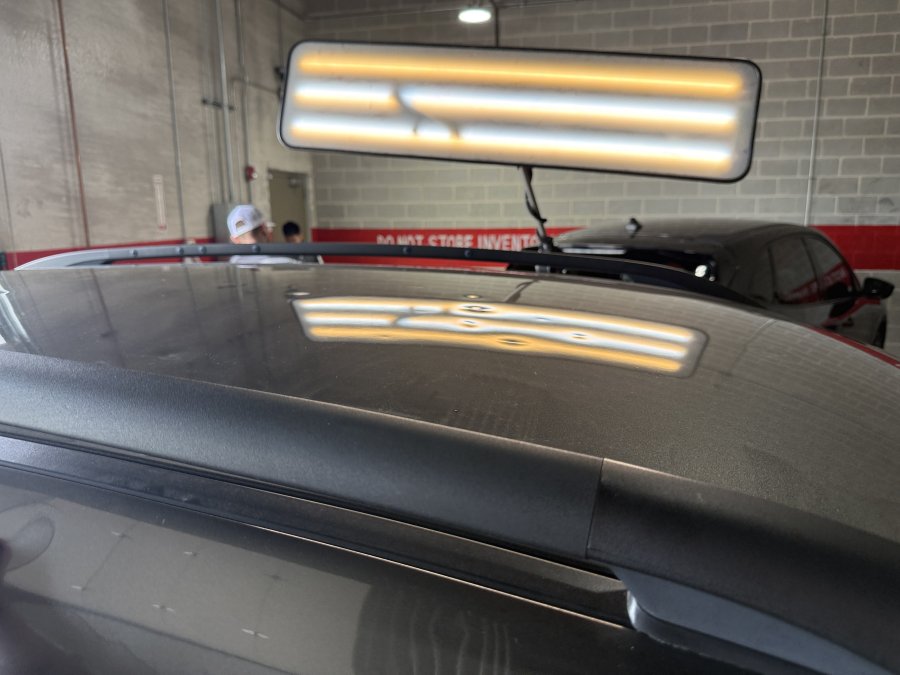
The hands-on labor is only part of the story after a hail season. Two other clocks run in parallel, and they are the ones that usually decide how long you are actually without your vehicle:
- Insurance approval time. If you are filing a claim, the repair cannot start until the adjuster's estimate is reviewed and approved. That workflow can add days before a technician ever touches the vehicle. Hail Inc. works directly with insurance companies to manage claims, but the calendar still depends on the carrier's review.
- Scheduling backlog. After a major hail event along the Front Range, local shops fill up quickly. The physical repair might take a short time, but the wait for an open bay or a mobile appointment can be the longest part of the process. Booking an inspection early can help you plan your timeline.
Because hail often covers a large surface, shops commonly plan the job panel by panel. Work on one area can overlap with setup on another, which helps keep the total time reasonable.
A practical way to read a hail-damage timeline is to separate it into three numbers: the labor hours for the panels involved, the days spent waiting on insurance approval, and the days spent waiting for a scheduled slot. Ask for all three. Hail Inc. can walk you through each one after an in-person inspection of your vehicle.
For a precise estimate tied to your vehicle, contact Hail Inc. to schedule an inspection.
- Labor hours scale with the number of panels and dents.
- Insurance approval can add calendar days before work begins.
- Post-storm scheduling backlog is often the longest wait.
- Mobile repair can cut drop-off and pickup days for qualifying vehicles.
How Long Does Paintless Dent Repair Take Overall?
The overall PDR timeline is the sum of inspection, repair, finishing checks, and pickup. Inspection sets the plan, repair does the work, and the final check confirms the results meet your expectations before you drive away.
Many customers ask how long they will be without their car. Hail Inc. works to keep that period short and clear. Our team can explain your expected timeline and whether a rental vehicle is available as part of the process.
Common steps in the overall timeline:
- Inspection and written estimate
- Panel-by-panel repair
- Quality review
- Vehicle return and walkthrough
Getting a Reliable PDR Repair Time Estimate in Arvada
A reliable estimate comes from an in-person look at the vehicle. Photos help, but a technician can only confirm depth, access, and material by checking the panels directly. This is why Hail Inc. recommends inspection before committing to a timeline.
Hail Inc. offers valet pickup and drop-off for homes and offices, so you do not have to rearrange your day to bring the car in.
When you ask for an estimate, request the labor hours, the calendar days, and what could change the timeline. A good estimate explains its assumptions.
Booking Your Hail Damage Repair With Hail Inc.
Booking starts with a quick online appointment. Hail Inc. works directly with insurance companies to manage claims, and our certified technicians handle the repair so you can focus on your day.
Hail Inc. offers a lifetime warranty on professional auto body repairs. Valet pickup and drop-off is available for homes and offices.
Ready to get your vehicle back to its original condition? Schedule an Online Appointment with Hail Inc. today and get a clear picture of your repair timeline.
Frequently Asked Questions
How long does a PDR dent repair take?
Most PDR repairs take anywhere from under an hour for a single small dent to a full day or more for a vehicle with many dents across several panels. Repair time depends on how many dents there are, how large and deep they are, and whether the technician can reach the back of the panel. A technician can give a closer estimate after inspecting the vehicle in person, since visual damage alone does not always reveal how much work is involved. Hail Inc. recommends contacting the shop directly or requesting a quote through its website for a time estimate specific to your vehicle.
How long does paintless dent repair take for hail damage?
Hail damage often involves many small dents spread across the hood, roof, trunk, and doors, so the total time depends on how many dents need work. Each dent is typically worked individually, and the technician may need to access the back of the panel for each one. Severe hail storms can produce dozens of dents, which lengthens the appointment considerably. Panel access, dent depth, and the condition of the paint all affect the schedule, so a specific timeline is best confirmed with the technician after an inspection.
Can the location of a dent affect PDR repair time?
Yes. Dents on open, flat panels such as the hood or roof are often easier to reach than dents near a body line, a panel edge, or a reinforced structural area. Dents near the edge of a panel may need more careful leverage and patience. Dents located where a window, trim piece, or interior panel blocks access to the back of the metal can also add time, since the technician may need to remove components first. Location is one of the first things a technician evaluates when estimating how long a repair will take.
What factors affect how long paintless dent repair takes?
The main factors are the number of dents, their size and depth, their location and panel accessibility, the type of metal and vehicle, the condition of the paint, and the technician's experience. Crease dents and dents with sharp creases generally take longer than round, shallow dents. Aluminum panels can require different techniques than steel. No repair time can be promised without an inspection. Asking for an in-person or detailed photo assessment helps produce a more accurate estimate.
Hail Inc. is ready to inspect your vehicle and give you a clear timeline for PDR repair. Schedule an Online Appointment to get started.